
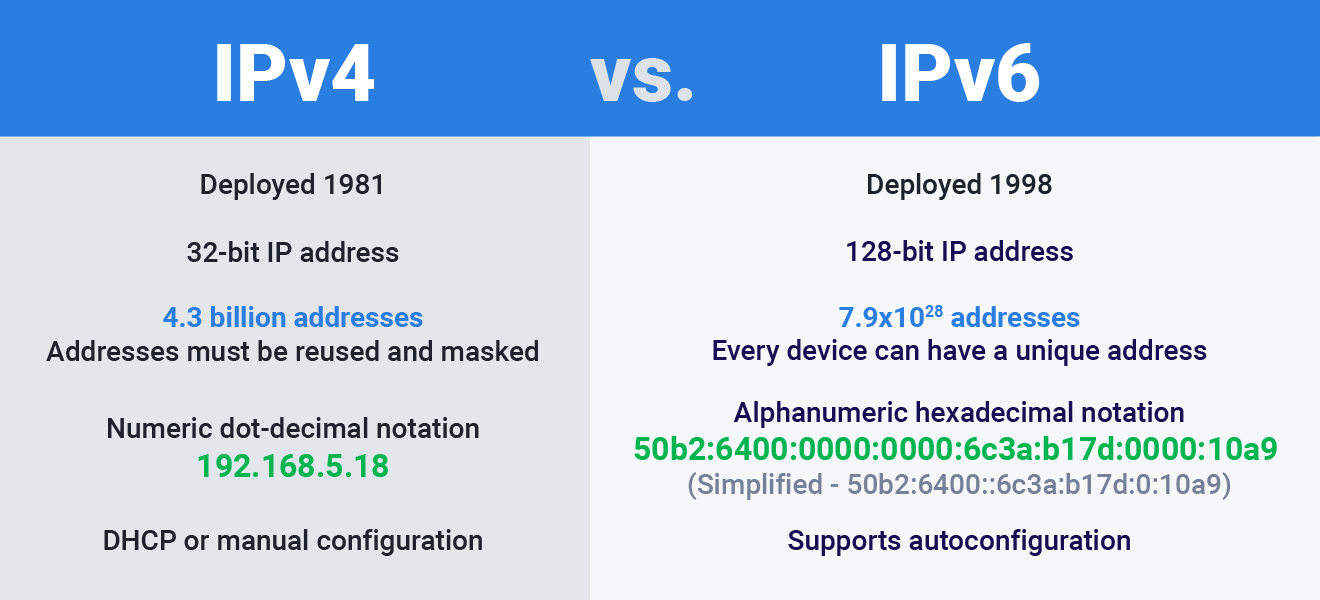
An IP address is a unique number that helps to identify the device within a network and can be common to transmit and receive data via the internet. It operates on the Internet Protocol, which supports the process of making the devices identify one another, directing the traffic correctly, and remaining connected anywhere in the world. The introduction of IPv4 followed through by huge use of the internet led to the introduction of IPv6, which has the capacity to accommodate more devices. The knowledge to differentiate IPv4 and IPv6 is essential to companies, network administrators, cloud providers, and hosting companies. The system helps all these sectors in managing networks effectively within the arena of digital business in the contemporary world.
Key Factors to Differentiate IPv4 and IPv6
Address Space
IPv4 has a 32-bit address system, which has limited addresses. The 128-bit system is common in IPv6 to offer a vast number of addresses. This difference facilitates the growth in future, reduces address sharing, as well as long-term network planning of business and service providers in the world today.
Configuration Method
IPv4 can either be manually configured or require additional solutions, such as DHCP, to assign an address. When you buy IPv6 address know that it has automatic configuration, whereby devices make their own addresses. This conserves time, minimizes mistakes and assists networks to expand more rapidly with minimal effort.
Security Features
The IPv4 security relies on the capability and third-party tools. The support of IPv6 has built-in security provision including IPsec. Such a design can enhance data security, facilitate a more secure communication process, and decrease the use of third-party security services among enterprises that use sensitive traffic every day globally.
Network Performance
IPv4 utilizes broadcast traffic, which can load the network. IPv6 eliminates broadcast and includes more efficient ways of routing. This helps in the minimization of congestion and enhances speed. It also provides better performance of the current applications and cloud-based services to all the large networks with users, devices and data expansion safely and reliably daily all over the world.
Address Format
The idea to lease IPv4 addresses comes in the form of decimal form with four digits between dots. IPv6 is available in the hexadecimal format, and colons separate values with higher numbers. Hence, IPv6 offers a more scalable structure and easier address management to operators, engineers and service teams in contemporary digital infrastructure projects globally today.
Adaptability and Relocation
Older systems and devices are popularly getting support with IPv4. IPv6 is not entirely compatible with IPv4, and the transition methods are necessary. These are also dual stack and tunnelling, which enable organizations to migrate progressively without disrupting the services. It won’t affect the customers during the process of upgrading, mergers and planning long-term technology use over the world’s enterprise networks today.
Cost and Future Readiness
When you rent IPv4 address know that they have restrictions, which adds to their acquisition and management expenses. IPv6 provides many addresses and reduces long-term costs. This makes IPv6 a future-proof option that enables growth, innovation and consistent operation of networks in the long run. It is helpful for companies that plan expansion, digital service provision and expansion globally with long term confidence and clarity.
Differentiate IPv4 and IPv6: Which is Better?
Choosing between IPv4 and IPv6 depends on the objectives of the network, the scope of the network, and future intentions. IPv4 is still popular and compatible with most of the current systems. IPv6 is more suitable for long-term development, because it provides more addresses, better security and efficient routing. Companies migrating to IPv6 will have flexibility, preparedness, and reduced expenses in the future. Although transition requires one to plan, the rewards supersede the obstacles.
Overall, IPv6 will be the more robust choice in the case of contemporary networks, cloud services, and growing digital processes. It facilitates innovation, mobile development, connected devices, and consistent performance for the users. Hence, it helps in changing business models in the contemporary enterprise landscape, making it a savvy strategic investment in sustainable digital success today in the global business landscape.
Insights on Transition Strategies from IPv4 to IPv6
Dual Stack Deployment
The most common transition strategy is dual stack, where devices and networks are operated using both IPv4 and IPv6 at the same time. It enables the steady migration without interfering with current services. Applications may also operate over either protocol, and compatibility is achieved as organizations enable IPv6 in stages, both in infrastructure and at the endpoints.
Tunneling Mechanisms
IP tunnelling allows IPv4-only networks to support IPv6 traffic by wrapping IPv6 packets. The methods such as 6to4, ISATAP and GRE tunnels are used at initial adoption stages. Nevertheless, the addition of tunnelling complicates and creates possible latency and should only be viewed as a transitional solution.
Translation Techniques
Translation strategies enable communication between IPv6-only systems and IPv4-only systems, using protocol translation. Approaches like NAT64 and DNS64 translate inter-protocol traffic. This method is practical when the shortage of IPv4 addresses is significant. Hence, it may diminish visibility and make it difficult to debug and understand application behaviour.
Phased Migration Planning
An effective conversion of IPv4 to IPv6 needs planning, evaluation and training. The best way to prepare is to have organizations perform an audit of the current infrastructure. Just verify that the hardware and software are IPv6 ready, and transition to the services gradually. The risks are minimized through clear timeframes, testing, and awareness of the staff, as well as guaranteeing long-term scalability and internet expansion.
Unlock the Power of IPv4 Addresses with IPv4 TradeHub
As IPv4 addresses become increasingly scarce, owning the right IP assets is a strategic advantage. IPv4 TradeHub connects businesses, ISPs, and hosting providers with verified IPv4 buyers and sellers worldwide. Whether you’re looking to buy, sell, or lease IPv4 addresses, our secure platform ensures transparent pricing, fast transfers, and expert support. Stay competitive, maximize your IP investments, and scale confidently with us.