
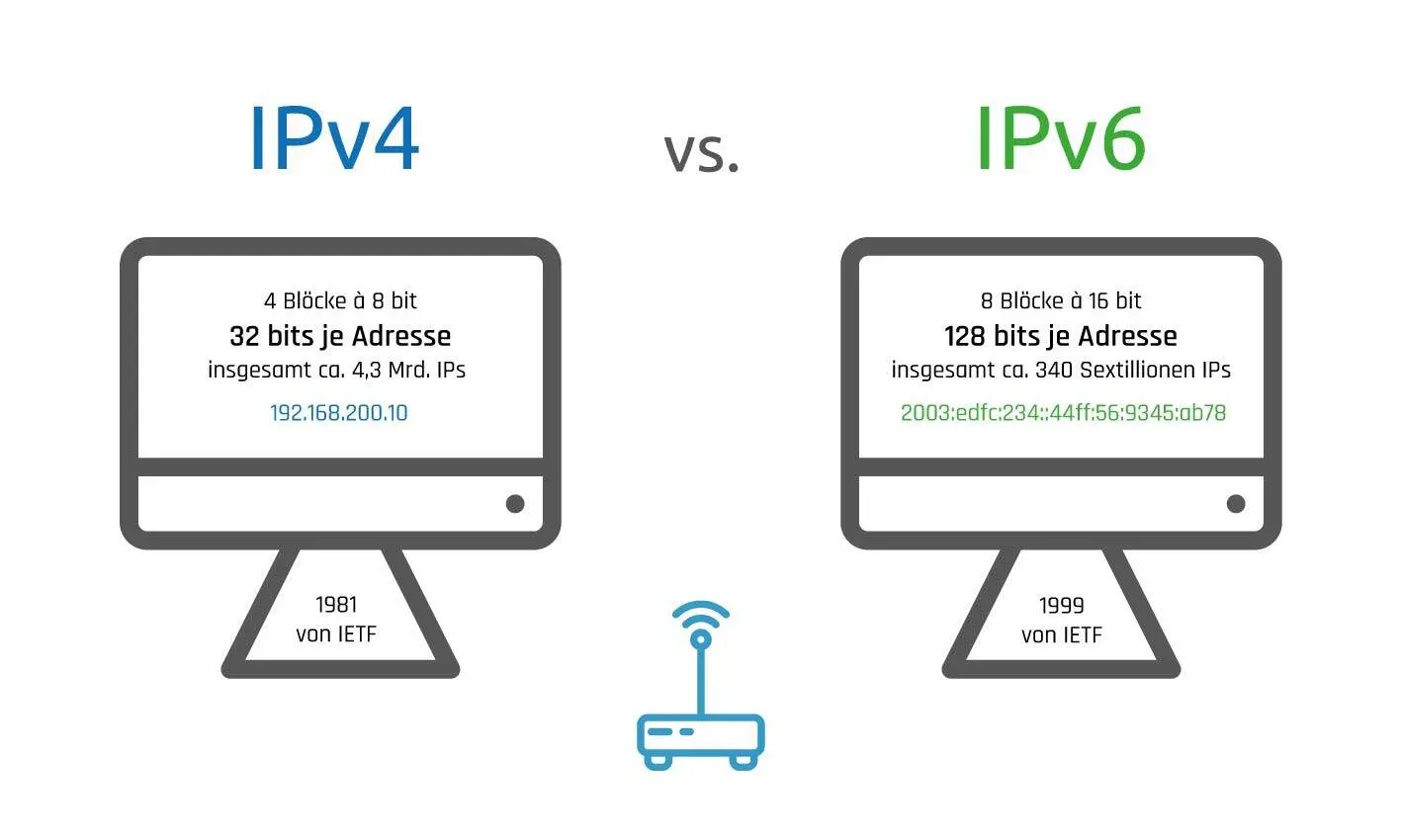
Internet protocols are fundamental guidelines that enable equipment to communicate with one another on the internet. An Internet Protocol, or IP, helps data to locate the correct route between different devices. IP addresses are essential since they are common to ensure that information is sent to the right computer, telephone or server. At present, there are two standard protocols, namely IPv4 and IPv6. With the expansion of businesses on the internet, there is an inseparable question: is IPv4 or IPv6 better? Making a wise decision has an impact on the expenses, speed and future planning of the network.
IPv4 vs IPv6: Key Differences Explained
Address Structure and Availability
IPv4 has a 32-bit address system, which restricts the number of addresses available internationally. The format of IPv6 is 128 bit which provides colossal provision for the coming growth. This change is beneficial to more gadgets, reliable connections, and long-term internet growth without complicated workarounds and reduces the risks of network stress.
Network Administration and Configuration
IPv4 is based on manual configuration and the introduction of additional tools, such as NAT, to control traffic. When you buy IPv6 address know that it is available on automatic address configuration, thus simplifying the management of networks. This saves time, reduces errors, and assists teams in concentrating on quality of service and user needs in contemporary business and domestic settings.
Security Design Approach
When you lease IPv4 addresses know that it lacks the built-in security available through external tools. IPv6 has an inbuilt security protocol and enhances device confidence. Although they both require attention, IPv6 provides cleaner traffic flow. It comes with easier protection planning of expanding digital space and the interconnected systems, teams, and global.
Compatibility and Adoption
IPv4 remains in use and compatible with older systems and tools. IPv6 is perfect for new networks, mobile services, and cloud expansion. Combining them both is a guarantee of smooth operations and consistent change without disturbing the users and regular business operations in the transition to active digital change.
Long-Term Internet Growth
IPv4 and IPv6 are not competitors, but the phases of the internet development. IPv4 continues to make systems work today, even as IPv6 gets networks ready tomorrow. Knowing both can enable businesses to plan smart upgrades and manage cost control. Hence, they provide stable digital services at best with confidence towards long-term online success, stability, and trust.
Performance Comparison: IPv4 vs IPv6
The availability of performance between IPv4 and IPv6 is mainly in terms of efficiency and routing. IPv6 eliminates the necessity of address translation, enabling end users to get a direct connection between devices. This enhances speed, reduces delays and helps with the flow of data. IPv4 can also perform but is likely to slow down with heavy traffic.
The IPv6 modern networks have the advantage of easier packet processing, support of mobile users and enhanced scalability. Performance in the real world relies on network configuration, provider, and appropriate configuration. It does not involve protocol selection in the regular business operation, planning, expansion, cost, timing, requirement, objectives, and outcomes, in general.
Security Comparison: Which Is More Secure?
One of the critical issues in the comparison between IPv4 and IPv6 is security. IPv6 also has built-in functionality for secure communication. Hence, it is easy to secure data. IPv4 is more based on provided security additions and tools. Both are safe in case of good management.
Nevertheless, IPv6 makes exposure less likely because it eliminates address sharing and allows more effective identification of devices. Robust policies, frequent updates, and awareness among the users must exist. Security takes place by daily network designs, monitoring, and maintenance in business systems, cloud services, remote teams, associates, customers, and future digital growth requirements, risks, planning, and activities.
Use Cases: When Should You Use IPv4 and IPv6?
Concept to rent IPv4 address is still applicable to the legacy systems, to any private network, as well as limited change environments. Many older devices and services still rely on them. IPv6 is suitable to new systems, cloud systems, mobile networks, and internet-connected devices. It favours unlimited address growth. Business establishments usually operate to remain adaptive.
The selection of an appropriate mix relies on the available budget, preparedness, and long-term digital objectives in accordance with the needs of the customers, the demands on the market, the risk mitigation, timelines, employee capabilities, operations, size, stability, trust, value, success, and results.
IPv4 or IPv6: Which Internet Protocol Is Better?
The decision between IPv4 and IPv6 is not whether it is good or bad. IPv4 provides familiarity and wide support in the present day. IPv6 is scalable, efficient and future-proof. In most organizations, IPv6 is the more favourable in the long term. Nevertheless, it will take years to use IPv4. An organized change saves risk and expense.
An optimal decision is one that makes a tradeoff between present needs and future growth plans, customer coverage, and consistent service provision over time. It helps in supporting innovation, trust performance, security, compliance, flexibility, budgets, teams, partners, markets, change, scale, stability, confidence, outcomes, success, value, goals, direction, planning, and execution.
FAQs: Common Questions People Often Ask
1. Is IPv6 faster than IPv4?
IPv6 is potentially faster when network optimization is achieved. However, the performance in the real world is highly dependent on ISP infrastructure and router support.
2. Is IPv4 to be eliminated soon?
Legacy systems and high demand, as well as compatibility requirements globally, will make IPv4 still be used for several years.
3. Is it possible to use IPv4 and IPv6 together?
Yes, with a dual-stack setup, there can always be a co-existence between IPv4 and IPv6 and hence compatibility and gradual transition.
4. Is IPv6 more secure than IPv4?
IPv6 has security measures which are inbuilt. However, proper configuration and management represent more significant than protocol selection.
Buy, Sell & Lease IPv4 with Confidence with IPv4 TradeHub
IPv4 addresses are no longer just technical resources; they are valuable digital assets. IPv4 TradeHub is your trusted marketplace for buying, selling, and leasing clean IPv4 blocks with complete transparency and compliance. Whether you are scaling infrastructure, monetizing unused IPs, or securing reliable connectivity, our expert-driven process ensures fast transfers, verified ownership, and global reach.