
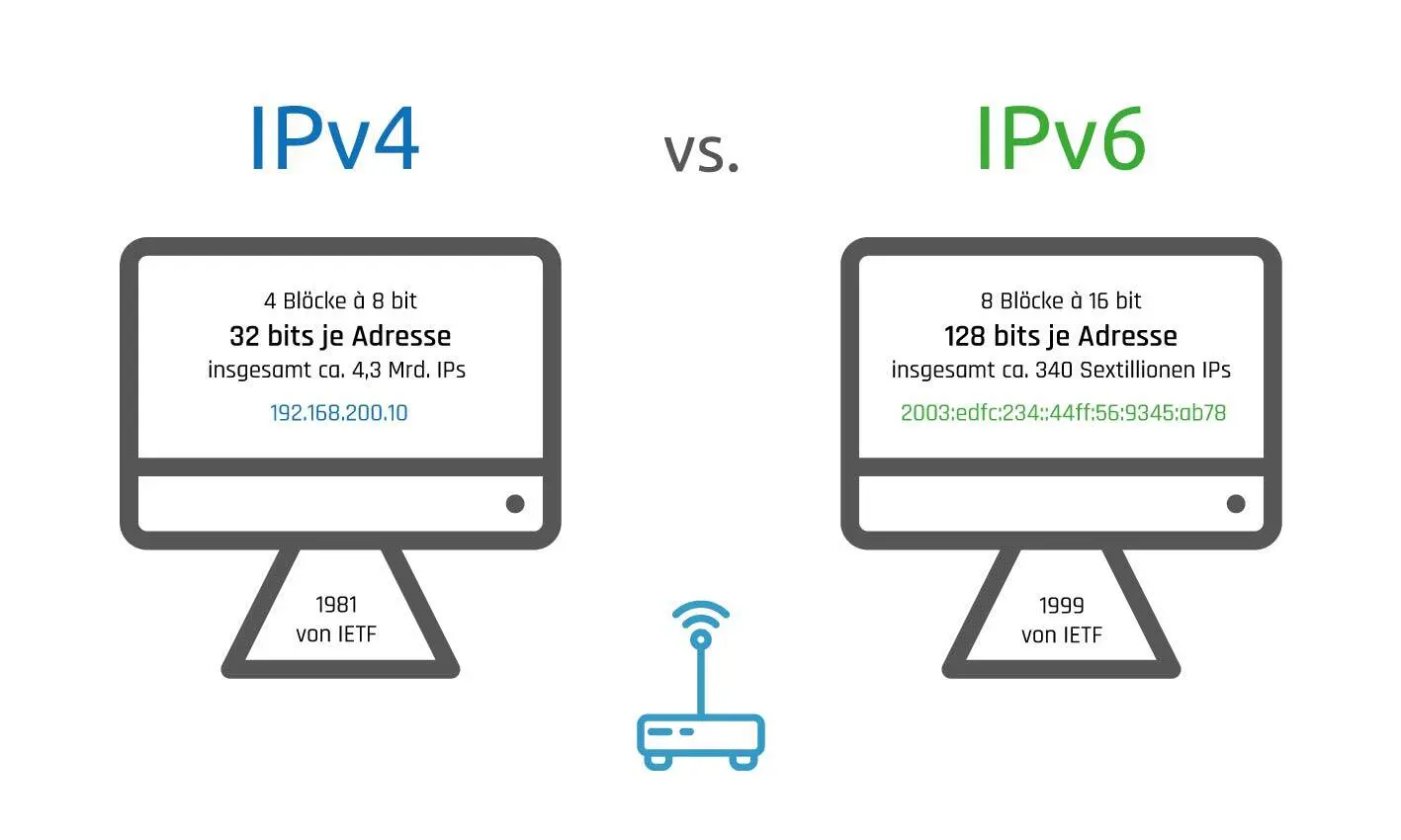
The internet generally runs through Internet Protocol (IP) addresses, which enable devices to communicate over the networks. Internet Protocol version 4 (IPv4) has been in use for decades as a foundation of internet connectivity. But as the internet grew quickly and billions of devices got connected, IPv6 (Internet Protocol Version 6) gave support to address the shortcomings of IPv4. This guide explains IPv4 vs IPv6 which is best for internet performance, and provides application examples to enable businesses to make the correct decision.
Overview Between IPv4 vs IPv6 Addresses
The Internet Protocol addresses enable the devices to recognize and interact with one another in the networks. IPv4 has a 32-bit address space. It comes with a capacity for supporting approximately 4.3 billion unique addresses. This pool started to dry up as the number of internet-connected devices grew at a rapid pace.
The next-generation protocol to overcome these limitations was IPv6. It has a 128-bit addressing space, which offers an enormous address space and a better networking environment. Although IPv4 is still common today, IPv6 has modern capabilities. It comes with better routing efficiency, excellent security services and provides a simple network setup as the future internet expands. Always look for the addresses by choosing a reliable and best IPv4 broker.
Key Differences Between IPv4 and IPv6
Length and Format of Address
IPv4 addresses are 32-bit and are available in 4 decimal numbers with dots, i.e. 192.168.1.1. The length of the IPv6 addresses is much longer, with 128 bits and represented in hexadecimal notation separated with colons. This extended structure enables IPv6 to incorporate a massive number of distinct addresses.
Address Capacity
When you buy IPv4 address know that their biggest weakness is its capability to accommodate addresses. It has a capacity of approximately 4.3 billion unique combinations. This pool is available with billions of devices already having access to the internet. IPv6 addresses this issue by offering about 340 undecillion possible addresses, which will have long-term support for other future technologies.
Network Set Up
The IPv4 networks gets the configuration with the help of some services, such as DHCP, to allocate IP addresses. IPv6 comes with automatic address configuration, whereby the devices can generate their own addresses upon accessing a network. This saves on administrative effort and makes it easy to deploy large networks.
Security Features
IPv4 did not have security access to it, and it implement itself using other protocols like IPsec. By comparison, IPv6 was originally built with more robust security in mind. It has inbuilt IPsec support, which is useful in enhancing authentication, integrity of data and secure communication in networks.
Packet Processing Efficiency
The IPv4 packet headers have a series of fields that are to be processed by the routers when transmitting data. The architecture of the packet header is simplified in process of IPv6 lease. This reduces the effort of the routers, and the router can handle the packets more quickly. This simplified architecture enhances routing performance and could help to enhance the network performance.
Usage of Network Address Translation (NAT)
Due to the scarcity of IPv4 addresses, Network Address Translation (NAT) is used to enable many devices to use one public IP address. IPv6 does not introduce the need because it has sufficient addresses so that all devices will have a distinct public IP address.
Routing and Network Performance
IPv6 enhances the efficiency of routing because of the hierarchical system of address allocation and the simplified structure of headers. These improvements contribute to better traffic processing by routers, especially in large networks. IPv4 routing systems might be complicated with the growth of networks. IPv6 was created to be more conducive to modern worldwide internet systems.
IPv4 vs IPv6 Which Is Best for Internet Efficiency?
In terms of internet efficiency, the idea to buy IPv6 proxies has several advantages over IPv4. The simplified nature of its header format enables the routers to handle packets faster, enhancing the overall performance of the network. The large address space also eliminates Network Address Translation, which provides greater direct device-to-device communication.
Also, IPv6 can use automatic configuration and better routing design. This may make it easier to manage the network and to make it more scalable. Nevertheless, IPv4 is still effectively working because it has a well-established infrastructure and can integrate with most of the existing systems.
Practically, a variety of networks nowadays run both protocols in parallel. However, IPv6 is often believed to be the more future-proof that could support the increasing global web.
FAQs: Common Questions People Often Ask
1. Is IPv6 faster than IPv4?
IPv6 can be marginally faster since it requires no NAT processing, and routing is more efficient. Thus, the actual performance differences are normally small.
2. Why is an IPv4 address still useful?
The IPv4 addresses are limited and are in extensive use on the Internet. They are scarce digital resources whose market demand is high.
3. Can IPv4 and IPv6 work together?
Yes, several networks have dual-stack implementation. This allows both IPv6 and IPv4 to coexist to provide compatibility and a slow transition.
4. Does IPv6 improve security?
IPv6 features built-in IPsec essentials of secure communication. However, overall security remains based on the correct setting of networks and policies.
Buy, Sell & Lease Premium IPv4 Addresses Today
Looking to secure high-quality IPv4 addresses for your network infrastructure or business growth? IPV4 TradeHub is your trusted marketplace for buying, selling, and leasing verified IPv4 blocks. Our platform connects global buyers and sellers with transparent pricing, secure transfers, and expert support throughout the transaction process.