How to Sell or Lease Your IPv4 Block Legally Explained?

how to sell or lease your IPv4 block

IPv4 addresses are increasingly scarce as the internet continues to grow, making available address space a valuable digital asset. This scarcity has created a strong secondary market where organizations buy, sell, and lease IPv4 blocks to meet operational needs. Because these transactions involve critical internet resources, it is essential to follow legal and secure procedures. … Read more

Buy vs Lease IPv4 Blocks: Which Option Is Better?

Buy vs Lease IPv4 Blocks

IPv4 address exhaustion has become a global concern as available addresses have nearly run out, yet demand continues to rise due to internet growth and connected devices. This creates a growing challenge for organizations deciding whether to buy or lease IPv4 blocks. ISPs, hosting companies, enterprises, and startups all face this dilemma. This guide helps … Read more

How to Sell or Lease Your IPv6 Block: Market Overview

How to Sell or Lease Your IPv6 Block

IPv6 adoption is steadily increasing worldwide as the internet continues to expand and demand more scalable connectivity solutions. Unlike IPv4, which faces severe address scarcity and has created a strong resale market, IPv6 offers an extremely large address space but is still gaining commercial and operational importance. Despite its abundance, IPv6 is becoming valuable for … Read more

Renting IPv4 Address 2026: How It Works Explained?

Renting IPv4 Address 2026

An IPv4 address is a special numerical identifier attached to every device that is linked to the Internet. This unique number enables the device to interact with other systems. In 2026, IPv4 is still in demand even though there is a huge rise in IPv6, primarily because of legacy systems and compatibility needs. The world … Read more

Purchase IPv4 Address: How to Buy Legit IPs?

purchase-ipv4-address

IPv4 addresses are distinctive numerical numbers that are assigned to devices on the internet, to allow smooth communication between the servers, websites as well as the user. They are available in the format of 192.168.1.1 to direct data through networks. Even though IPv6 has been equally popular, IPv4 has been very common because it is … Read more

How Much Does an IPv4 Address Cost Per IP Block?

how much does an IPv4 address cost

IPv4 addresses are unique numerical identifiers assigned to devices on a network, enabling global internet communication. Due to the exhaustion of available IPv4 addresses, the market has shifted into a secondary trading ecosystem where prices fluctuate based on demand, region, and block size. Today, organizations often buy or lease IPv4 address blocks rather than obtaining … Read more

IPv4 Rental: How It Works and Why Businesses Use It

ipv4-rental

IPv4 rental is a networking service in which businesses can lease IP addresses rather than purchasing them. This solution is significant since IPv4 addresses are scarce and they are not adequate to serve all the organizations across the globe. Numerous businesses require IP addresses to operate websites, servers, applications and online services. Renting IPv4 addresses … Read more

Purchase IP Addresses for IPv4: What You Need to Know

Purchase IP Addresses for IPv4

In 2026, IPv4 addresses will continue to be an important digital resource because of the continued growth of the internet and the scarcity of IPv4. Enterprises, ISPs, hosting, and organizations continue to depend on IPv4 to connect their networks, old-school systems, and worldwide connectivity. Since IPv4 has already been depleted on the regional internet registry … Read more

Convert IPv6 to IPv4: Everything You Need to Know

Convert IPv6 to IPv4

The transition from IPv4 to IPv6 has been one of the most significant evolutions in internet infrastructure. IPv6 was introduced to solve the limitations of IPv4. Many systems, networks, and applications still rely heavily on IPv4 compatibility. As a result, the need to convert IPv6 to IPv4 or enable communication between both protocols remains essential … Read more

IPv4 or IPv6 Comparison: Key Differences Explained

IPv4 or IPv6 Comparison: Key Differences Explained

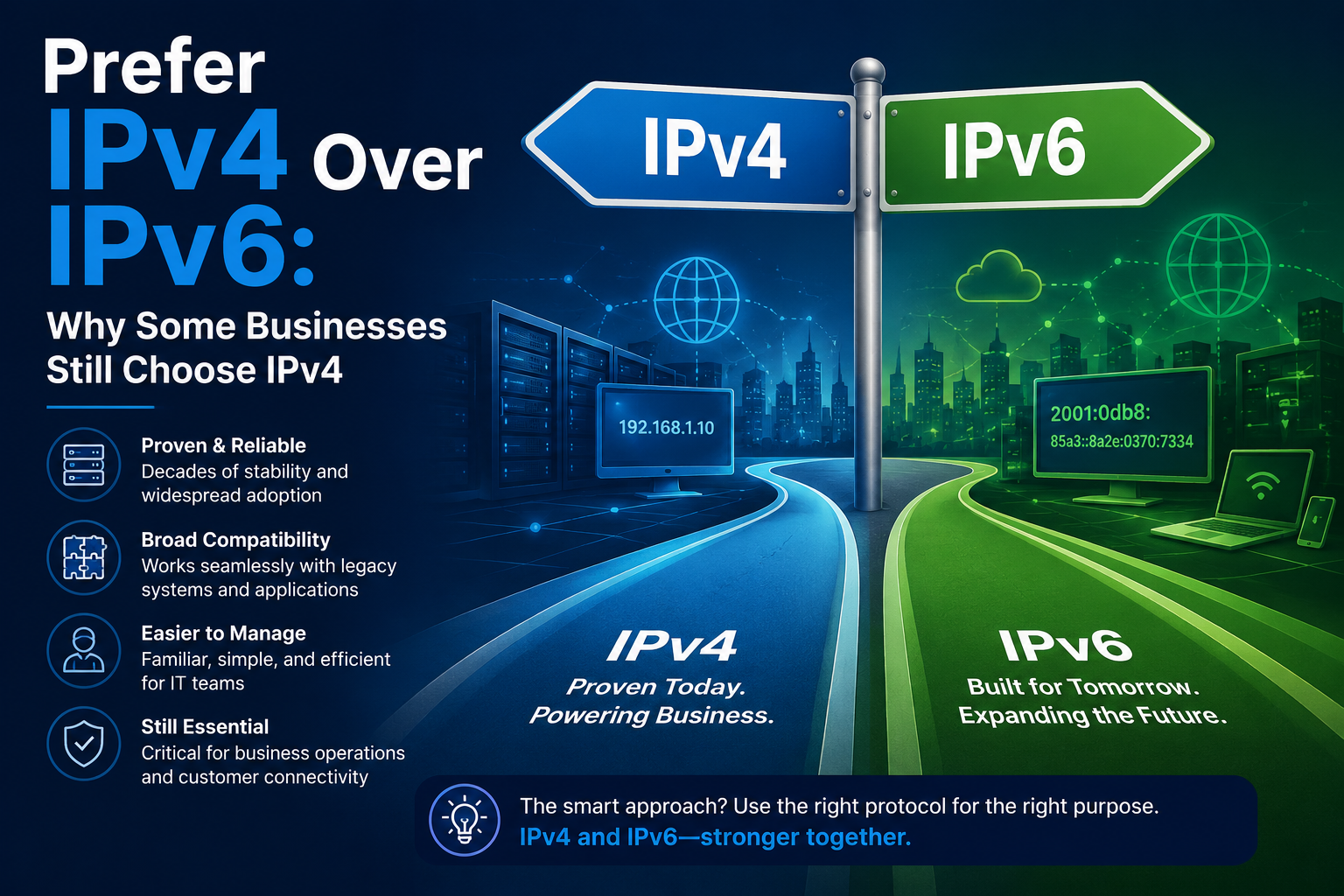
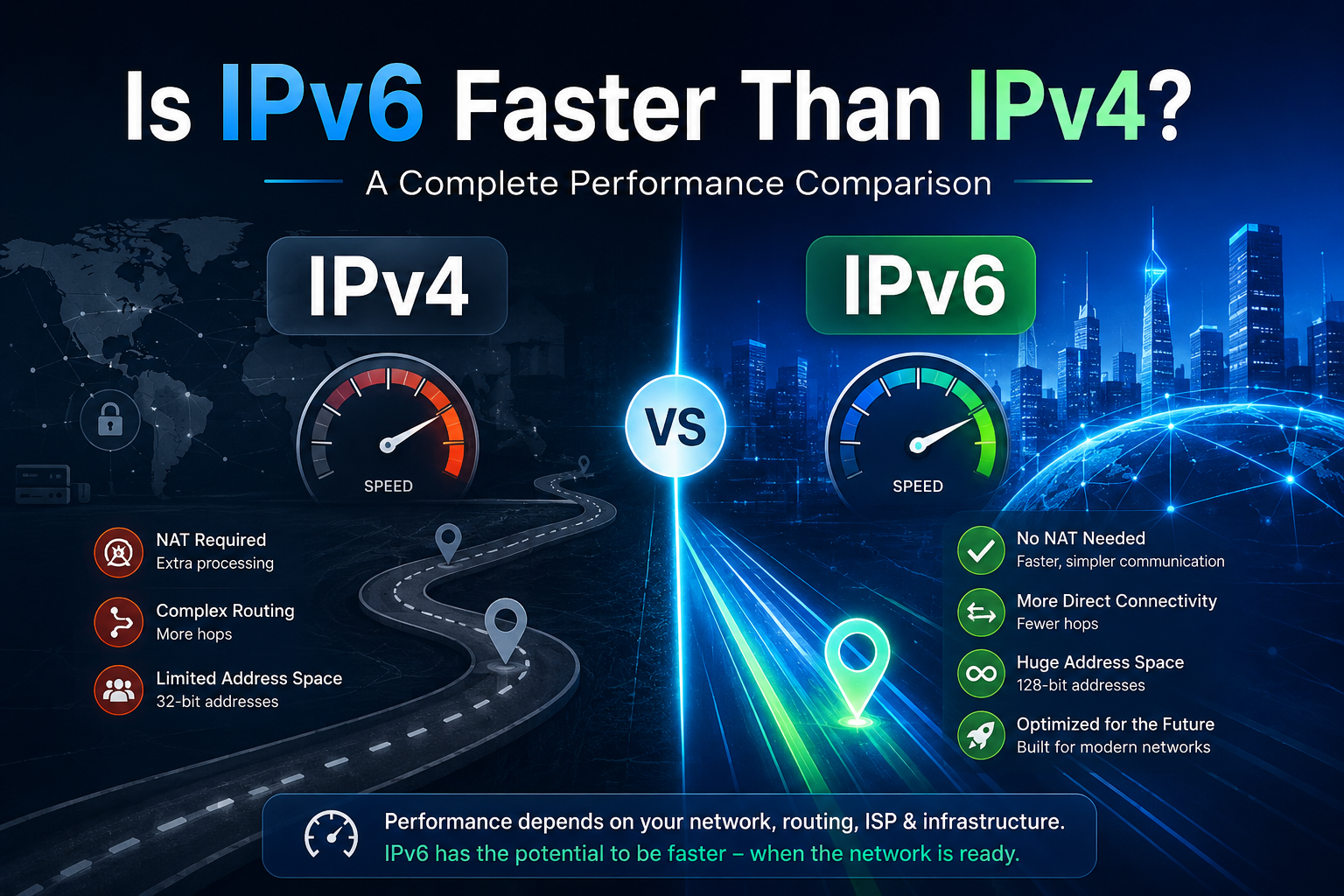
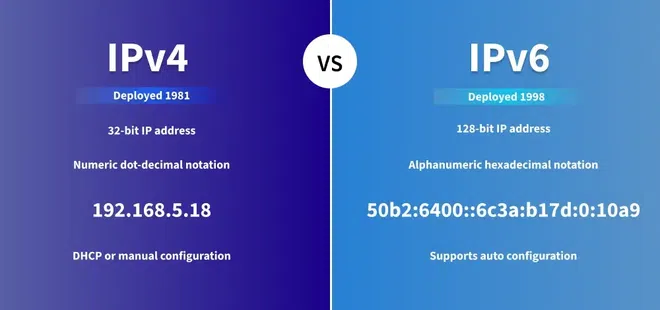
IPv4, the long-standing Internet Protocol, uses 32-bit addresses, supporting about 4.3 billion unique devices. In contrast, IPv6 uses 128-bit addresses, offering virtually unlimited connectivity to meet today’s digital expansion. Beyond address capacity, IPv6 enhances security, simplifies network configuration, and improves data routing efficiency. For businesses and IT professionals, transitioning to IPv6 ensures scalability, future-proofing, and … Read more