Lease 12 IPv4 Blocks: The Smart Choice for Businesses in 2025

lease 12 IPv4

All Internet transactions, emails, and online services are operated using an IP address. The internet is still relying on IPv4 even though the adoption of IPv6 is on the rise. However, IPv4 addresses are finite, and the supply is dwindling. This scarcity presents a problem to companies that require the stability of IP resources. The … Read more
Short-Term vs Long-Term IPv4 Leasing: Understanding the Key Differences

Short-Term vs Long-Term-IPv4 Leasing-Understanding-the-Key-Differences

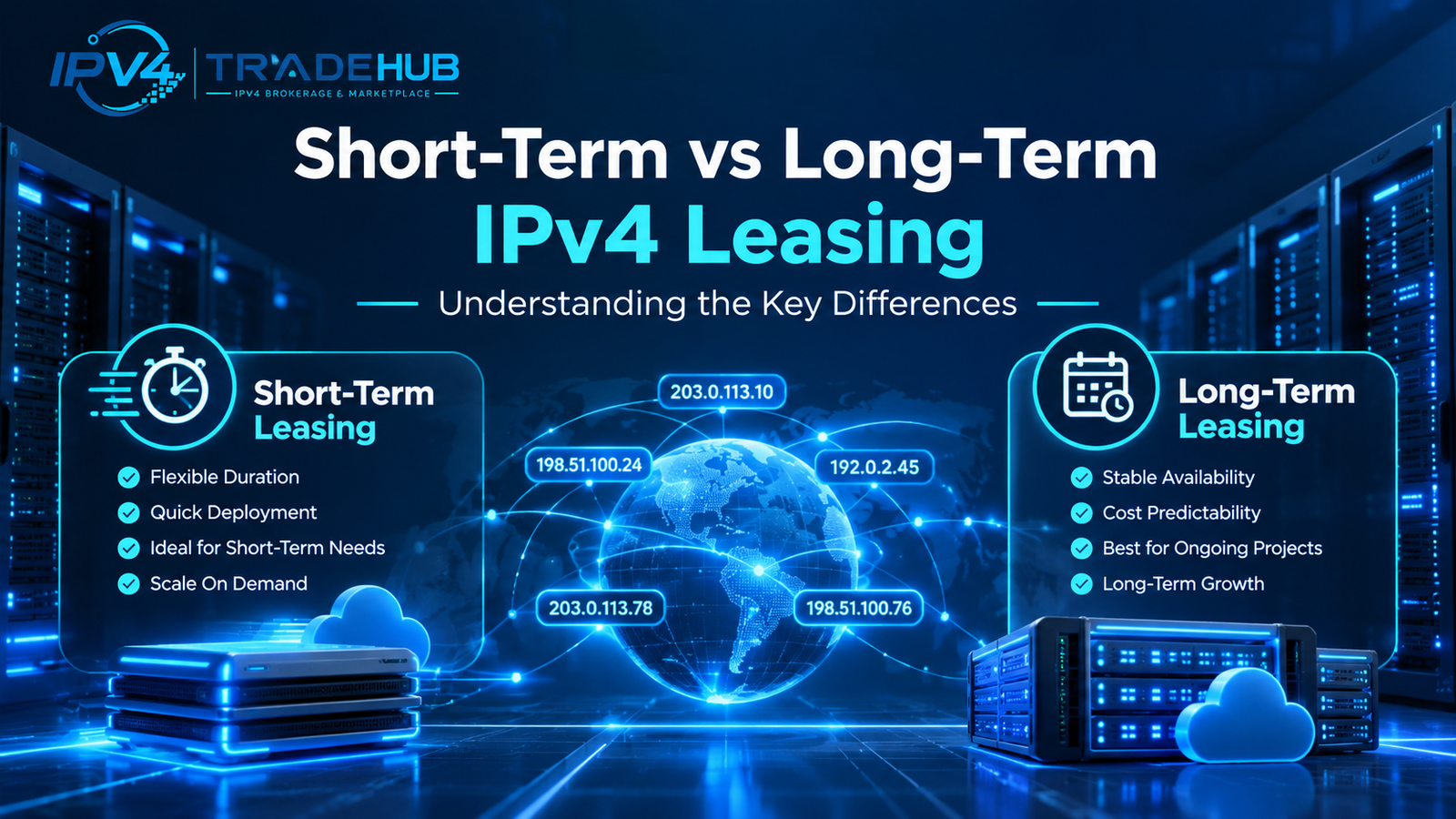
IPv4 leasing allows businesses to access IP addresses without the high costs of purchasing them outright. Depending on their operational needs, organizations can choose short-term or long-term leasing arrangements. Each option offers distinct advantages in terms of flexibility, cost, stability, and scalability. Understanding the differences of short-term vs long-term IPv4 leasing helps businesses make informed … Read more

Differences Between IPv4 and IPv6: A Complete Comparison Guide

differences-between-ipv4-and-ipv6

Internet Protocol (IP) is the foundation of modern internet communication, which helps devices to recognize and address one another within the networks. Each device on the internet needs a different IP address. With the growth of the internet, the original addressing system was seen to be scarce, and a new one was yet to develop. … Read more

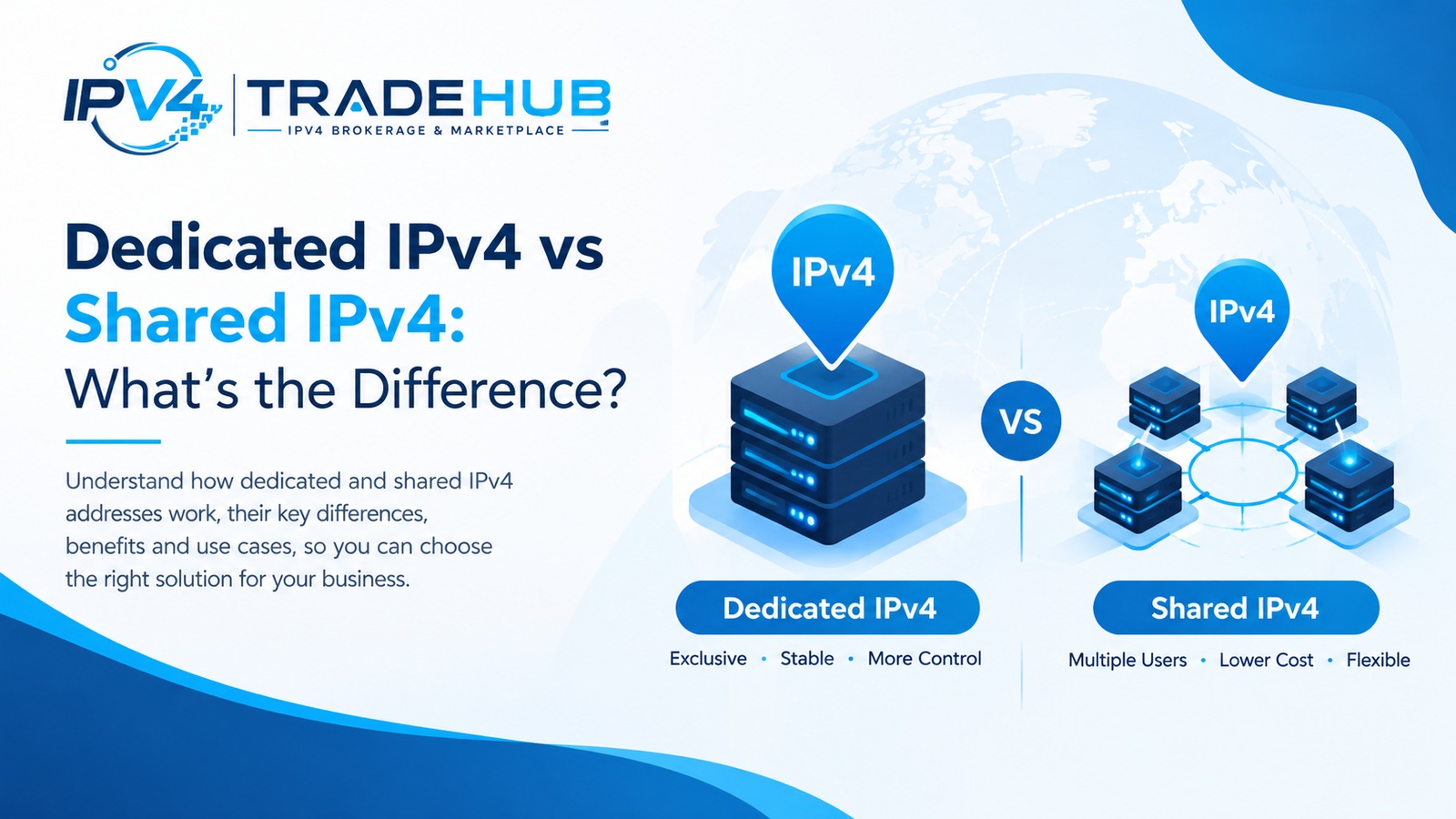
Dedicated IPv4 vs Shared IPv4: What’s the Difference?

dedicated-ipv4

Choosing the right IP address setup can make a significant difference to how a business manages its network, servers, applications, and online services. Two common options are dedicated IPv4 addresses and shared IPv4 addresses. While both can provide IPv4 connectivity, they work differently and offer different levels of control, consistency, and resource separation. For businesses … Read more

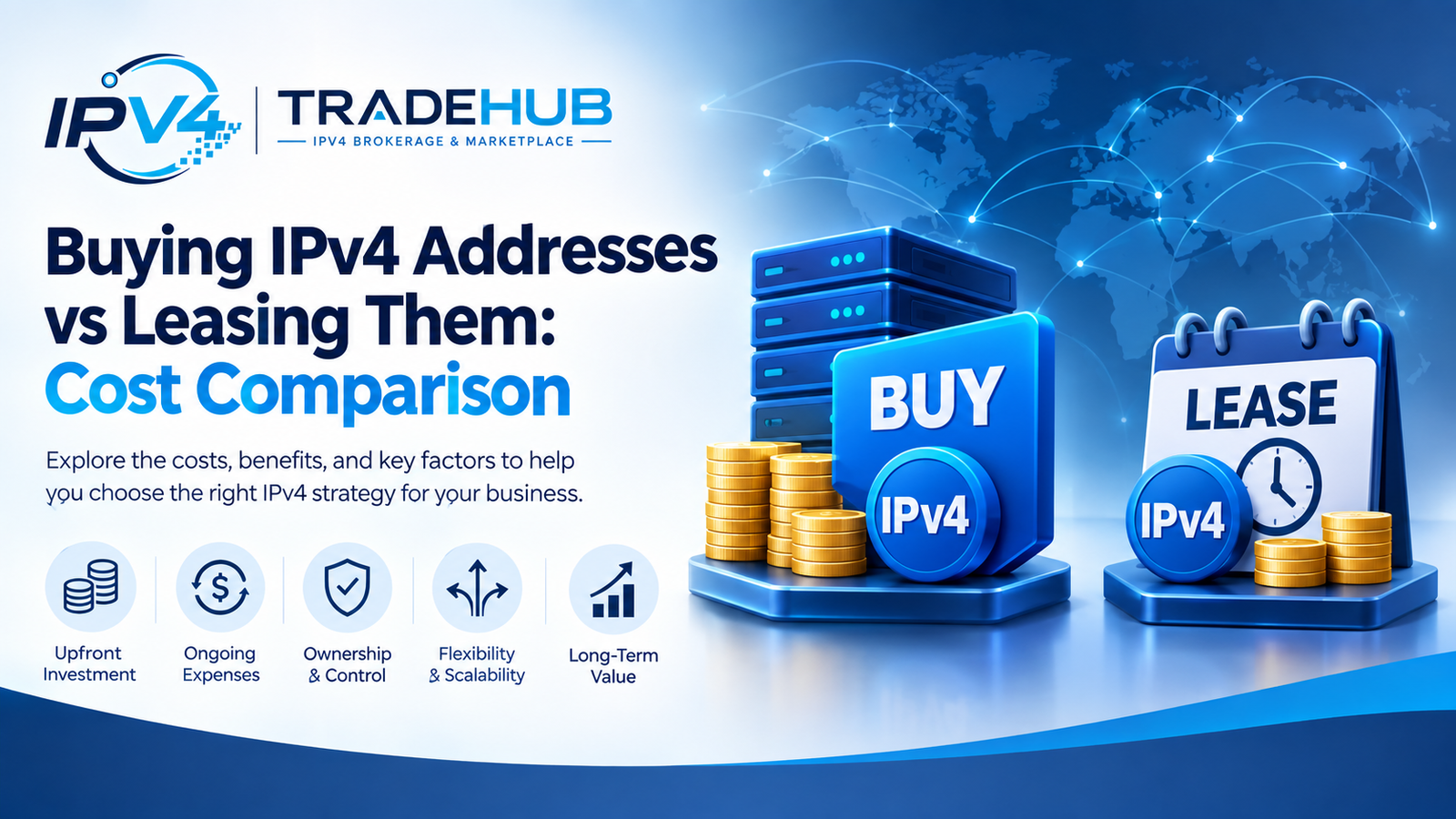
Buying IPv4 Addresses vs Leasing Them: Cost Comparison

Buying IPv4 Addresses vs Leasing Them

IPv4 addresses remain scarce as internet-connected devices and digital infrastructure continue to grow, making reliable address resources increasingly valuable to businesses. Organizations can secure IPv4 capacity by purchasing addresses outright or leasing them through recurring payments. The better option depends on budget, expected duration, scalability, and long-term networking requirements. This article compares buying IPv4 addresses … Read more

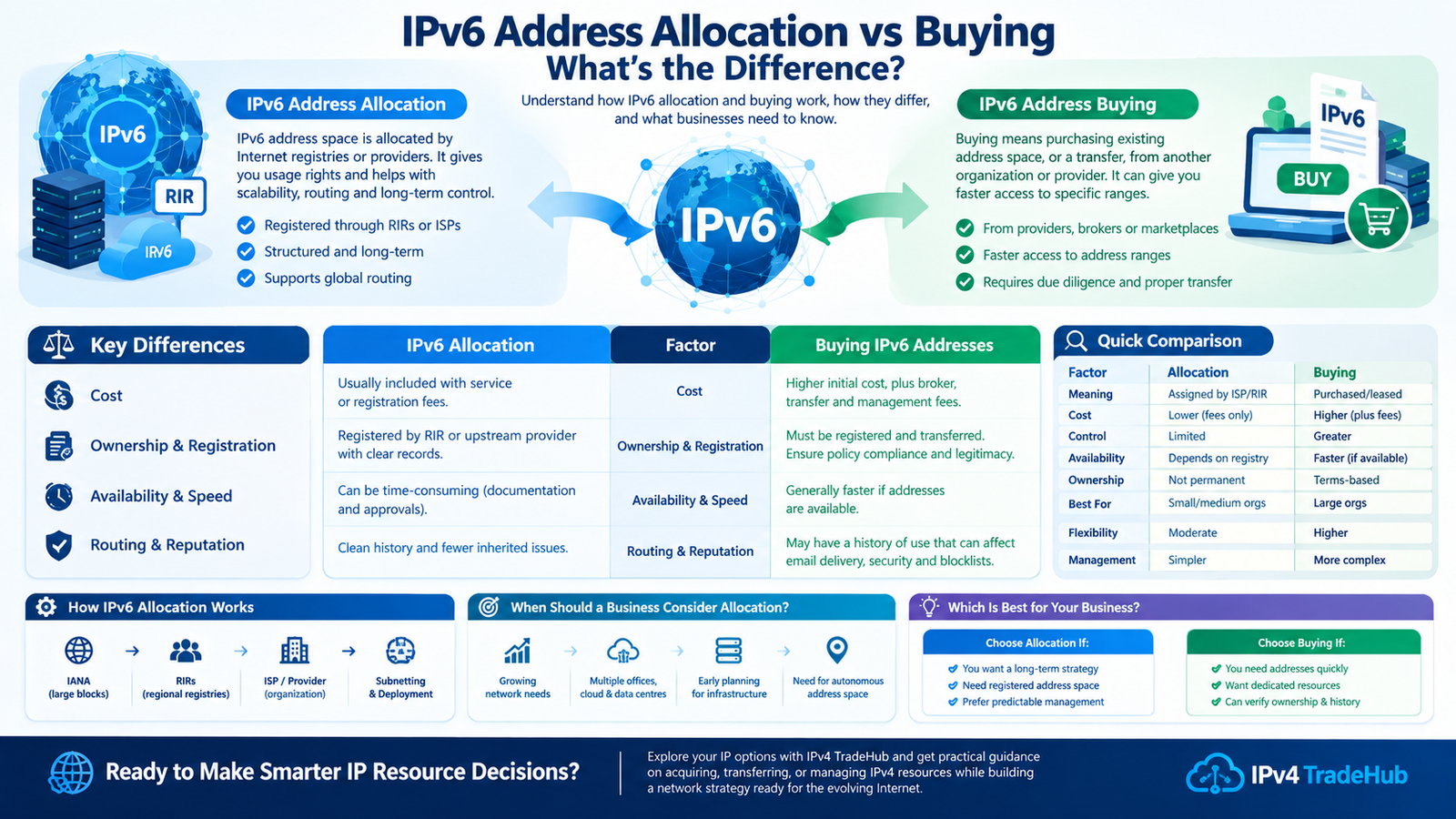
IPv6 Address Allocation vs Buying: What’s the Difference?

IPv6 Address Allocation vs Buying

As businesses transition from IPv4 to IPv6, expanding connected devices, cloud services, and networks make IPv6 increasingly essential. Unlike IPv4, IPv6 has a vast 128-bit address space, offering 2¹²⁸ possible addresses versus IPv4’s 2³², so scarcity works differently. This raises an important question: can businesses simply buy IPv6 addresses like IPv4 addresses? Understanding the difference … Read more

IPv4 Blacklist & Spam IP Lookup: How to Check Network Reputation

ipv4-blacklist-check

An IPv4 blacklist check helps determine whether an IP address has been term with spam, malicious activity, compromised systems, or other suspicious behavior. A strong IP reputation is essential for businesses relying on IPv4 addresses for email delivery, hosting, networking, and online services. Regular reputation monitoring helps identify issues early, reducing the risk of connectivity … Read more

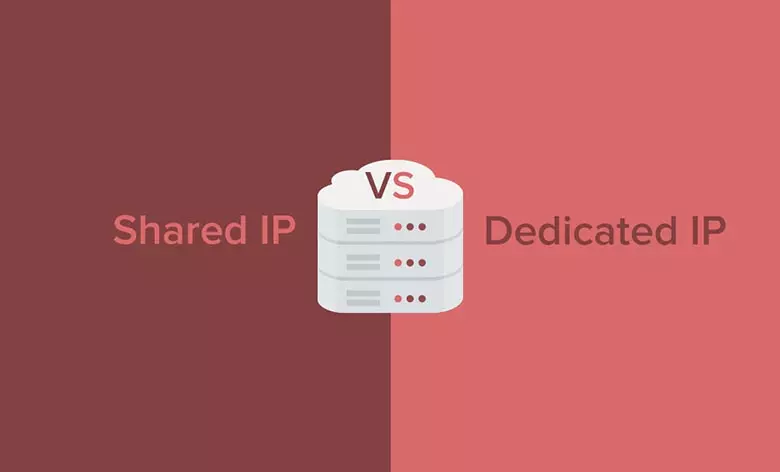
Dedicated IP vs shared IP: Which One Should You Choose?

dedicated-IP-vs-shared-IP

As businesses increasingly rely on websites, servers, applications, and network infrastructure, IP addresses have become essential to maintaining reliable digital operations. This brings a fundamental choice: dedicated IP vs shared IP. While dedicated IPs offer greater control and independence, shared IPs can provide cost-effective flexibility. The right option depends on factors such as control, reputation, … Read more

Reliable IPv4 Addresses for Business: How to Find Best One?

Reliable IPv4 Addresses for Business

An IPv4 address is a unique numerical identifier that enables devices and networks to communicate over the internet. Despite growing IPv6 adoption, IPv4 remains essential for many business systems and services. As available IPv4 resources become increasingly scarce, costs and operational risks are rising. Choosing an unreliable IP range can harm connectivity, reputation, and operations. … Read more