IPv4 leasing allows businesses to access IP addresses without the high costs of purchasing them outright. Depending on their operational needs, organizations can choose short-term or long-term leasing arrangements. Each option offers distinct advantages in terms of flexibility, cost, stability, and scalability. Understanding the differences of short-term vs long-term IPv4 leasing helps businesses make informed decisions, optimize network resources, and select a solution that aligns with their current requirements and future growth plans.
Short-Term vs Long-Term IPv4 Leasing: Key Differences
Lease Duration and Flexibility
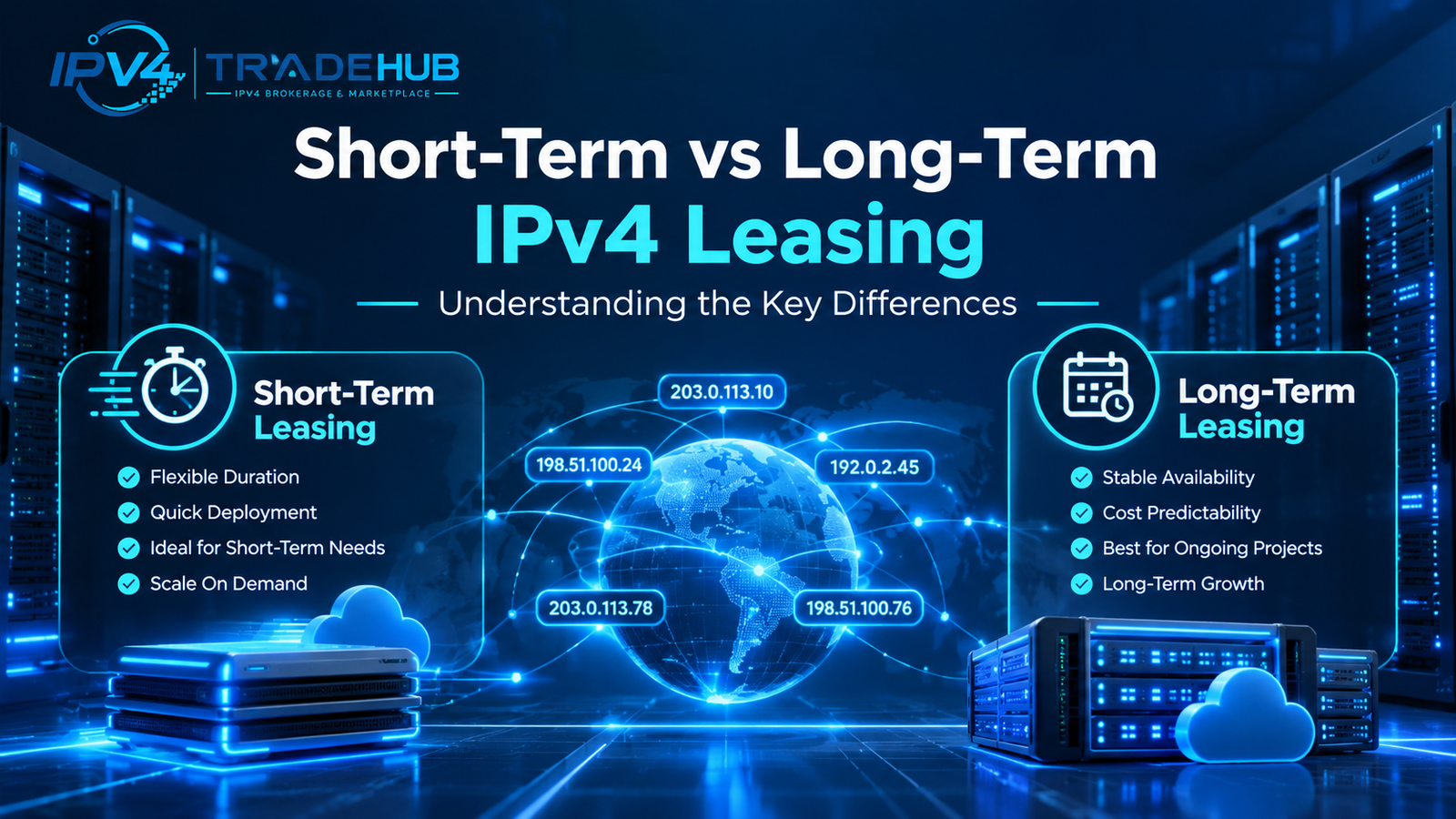
Short-term IPv4 leasing occurs when companies rent IP addresses for a limited time—typically the daily, weekly or monthly players are short-term addresses. Long-term leases are available for a year or more. Short-term contracts offer greater flexibility, and long-term contracts offer stability in the needs of the network.
Pricing and Budgeting
The short-term lease of an IPv4 generally has a shorter term and has a higher monthly price. If you’re thinking of using it for a longer duration, you might be able to save on monthly fees and/or have better rates. When choosing a leasing option for their business, it is crucial to compare the total cost, contract conditions, any extra fees etc.
Business and Network Requirements
For the temporary nature of projects, sudden increases in testing, and network demand, short-term leasing is suitable. It is possible to use long-term leasing in enterprises for their daily use of IPv4 addresses. The decision on which to select will be dependent on the number of addresses used and how long they will be used.
The Availability of IP Addresses
Businesses can quickly lease an IPv4 network when needed. For the regular business, you may have a more stable supply with long-term leasing. Availability is subject to the provider, the availability of the address and market conditions. It is crucial to research the quality and availability of addresses before signing up.
Contract Terms and Commitment
Generally, short-term method to lease IPv4 addresses come in shorter-duration contracts, which facilitate the ease of either adjusting or withdrawing services, where need be. Long-term leases are more of a long-haul commitment that may offer long-term access. Before choosing, organizations should assess the renewal policies, cancellation rules, and service conditions of their renewal policies.
Customer Relations and Support
When network demand changes rapidly, or businesses require additional IP addresses in a hurry, it’s a good idea to consider short-term IPv4 address leasing. For more predictable requirements, long-term leasing is better. If a company anticipates quick growth, it should take into consideration whether it is possible to add addresses in a simple manner without altering the lease contract.
Major Advantages of Short-Term vs Long-Term IPv4 Leasing
Short-Term IPv4 Leasing
Businesses can lease an IPv4 address for a short-term (days, weeks, months) period of time using short-term leasing. It is flexible, easy to find and less time-consuming. Above all, it can be helpful when running short-term projects, testing software, doing promotions or when the network suddenly needs more capacity.
It is ideal for use when businesses’ needs might shift in the near future. Hence, the prime benefits are start-up and rapid development initiatives, as well as companies working on short projects. Prior to signing a lease, verify the provider’s pricing, address reputation, and quantity of available leases, and what terms are in place regarding the lease’s termination.
Long-Term IPv4 Leasing
Long-term IPv4 Leasing enables businesses to lease respective addresses for a longer duration – typically a year or longer! It offers predictable expense, predictable access, as well as potentially lower monthly rates. This is for companies with a persistent network or hosting, VPNs or other infrastructure demands.
It is suited for companies that are anticipating regular demand and do not want to have to renew it often. Established businesses, Internet service providers and hosting companies could gain the most. Check the contract term, renewal requirements, quality, pricing and the provider’s growth potential prior to signing.
Short-Term vs Long-Term IPv4 Leasing: Which Is Effective?
Both short-term, and long-term terms to lease IPv4 address are good options; but choosing the right one depends on your business needs. With its flexibility and low commitment, STL is best suited for temporary projects, testing, or changing network requirements.
Nevertheless, long-term leasing is better for companies which need a steady address for their daily operations. It may also provide better rates per month and ease the budgeting procedure. If you are not sure, lease an Apartment for a brief period initially. Think about signing a long-term contract for stability and predictability of demand. Beware of service prices, reputation and reliability of the service provider before choosing any service.
FAQs: Commonly Asked Questions
1. Can I extend a short-term IPv4 lease?
It depends on the extension provider policy and availability of address, extension contract terms and predetermined extension renewals, extensions may be available.
2. Is long-term IPv4 leasing suitable for businesses?
For companies which have consistent address necessities, definite, business lease is beneficial. It offers a cost certainty, short-term renewals and better business continuity.
3. Who benefits most from short-term IPv4 leasing?
Short-term lease is perfect for holding providers, startups, developers and businesses with short-term projects in locations.
Find the Right IPv4 Leasing Solution for Your Business
Ready to simplify your IPv4 address planning? Explore your options with IPv4 TradeHub and compare leasing arrangements that align with your budget, infrastructure, and growth goals. Evaluate lease terms, understand your requirements, and make an informed decision. Start exploring IPv4 leasing possibilities today to support your business confidently.