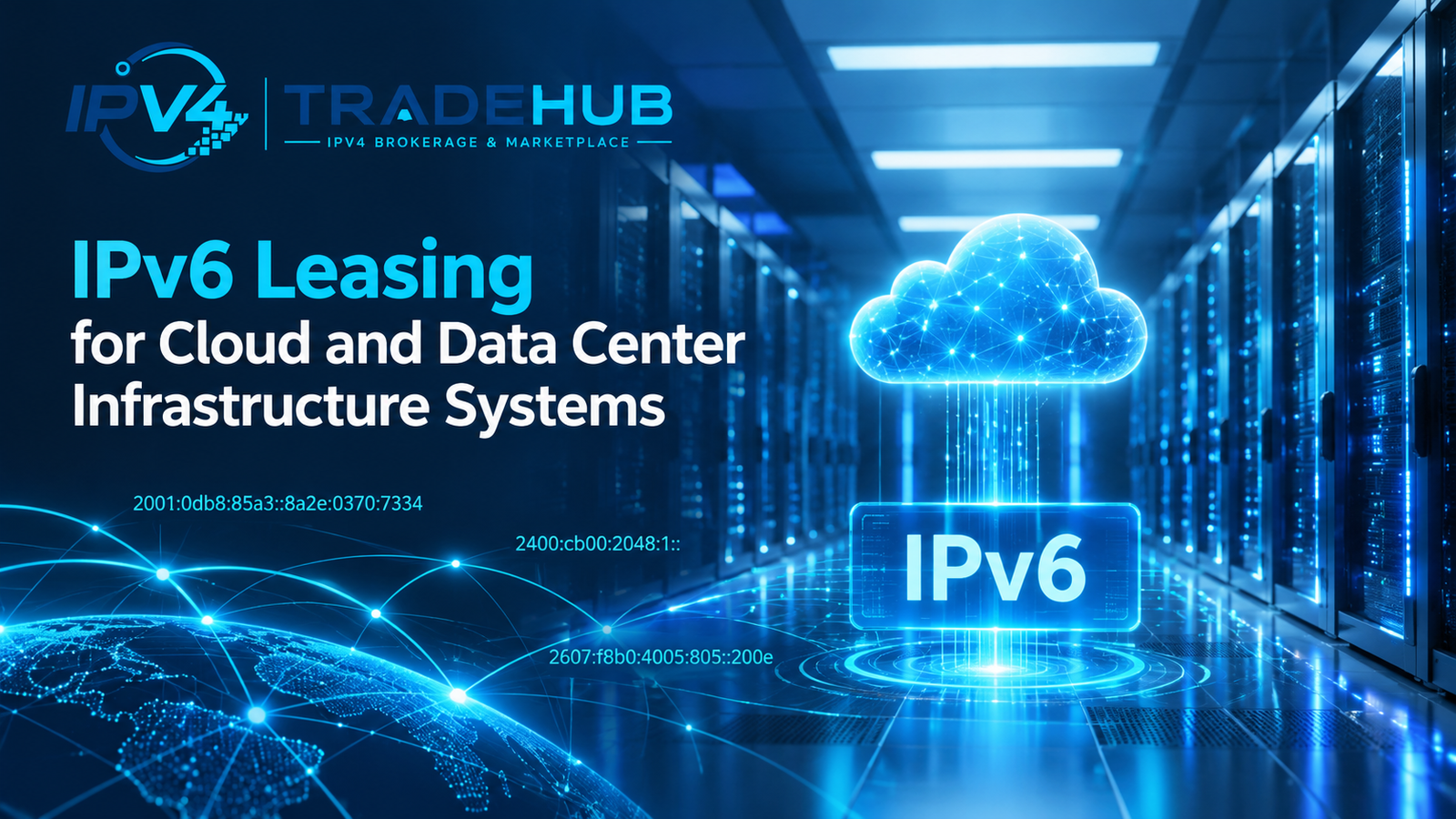
IPv6 leasing is an essential solution for cloud and data center infrastructure systems, providing access to large pools of IP addresses to support modern networking requirements. As organizations expand their digital operations, IPv6 leasing for cloud enables scalable connectivity, efficient address management, and improved network performance. It supports cloud computing, virtualization, hosting services, and data center expansion while helping businesses overcome IPv4 address limitations and prepare for future internet growth.
Importance of IPv6 Leasing for Cloud and Data Center
As the number of internet devices and online services is increasing, IPv6 leasing is becoming a trend in cloud computing and data center operations. IPv6 has a much bigger address space than IPv4 and is capable of meeting the increasing demands of companies. Hence, leasing IPv6 addresses would enable organizations to have the resources they want without purchasing address allocations and managing them.
It also works in support of scalable cloud infrastructure, virtual machines, hosting, and connected applications. Properly managed IPv6 leasing can enhance network planning and enable future expansion. Above all, it also assists businesses in ensuring reliability in connectivity while minimizing the hassle of limited IPv4 bandwidth.
Key Use Cases Across Cloud and Data Center Systems
IPv6 leasing is useful in various key applications within cloud and data centers. Cloud service providers can buy IPv6 address for virtual machines, containers, websites, as well as customer applications. Hosting firms might allocate addresses to computers and Internet-based facilities that must be linked with a high-quality connection. IPv6 is popular in the network expansion of data centers, infrastructure management, and communication between connected systems.
Meanwhile, IPv6 is also common in businesses that operate software-as-a-service platforms to meet the increasing demand of users. Also, IPv6 leasing assists technology firms and internet providers in expanding their services without relying fully on the finite IPv4. These applications render IPv6 useful to the contemporary network infrastructure.
IPv6 Leasing Challenges for Cloud and Data Center
Although the concept to lease IPv6 addresses can have a great number of benefits, there are several problems which companies might face during adoption. The most common problem is compatibility, with some applications, devices and network systems revolves around IPv4 systems. In an organization, technical skills may also be necessary to install routing and security policies, firewalls and address management in a suitable manner.
Above all, the second factor is a trusted IPv6 leasing entity since the credibility of addresses and route stability might influence the services. Inappropriate locations may introduce security gaps or lead to connectivity problems. Businesses can also face challenges across leasing terms, ownership and renewal terms. These challenges are seamless to handle with the right planning, regular monitoring and proper testing.
Best Practices for IPv6 Leasing for Cloud and Data Center
Select a Reliable IPv6 Leasing Company
Choose a provider for IPv6 selling of a good reputation, with a stable route, and clearly defined service terms. Enquire about check addresses, technical, and lease conditions prior to making a decision. An effective provider can be used to ensure that the network is stable and minimize the chances of sudden shutting down of services.
Check IP Address Reputation
It is best to check the reputation and history of leased IPv6 addresses before using them. IP addresses with a history of abuse can potentially be blocked by email services, security services and online applications. Hence, the use of clean address ranges can enhance trust, minimize connectivity problems and encourage business continuity.
Properly Configure the Network
Properly configure routers, firewalls, DNS records and network policies prior to implementing leased IPv6 addresses. Make sure systems are connected and ensure that IPv6 is supported by applications. Configurations are important to enhance performance, enhance security, and avoid unnecessary network disruption.
Enhance Security and Monitoring
To protect IPv6-enabled infrastructure, deploy proper firewall policies, access policies and security surveillance. Monitor traffic, routes, as well as suspicious activities. Since IPv6 devices may be given globally reachable addresses, there is a need to have efficient security policies. This would guarantee the security of cloud services, and data center resources.
Scalability and Renewal Plan
Present and future address needs to select an IPv6 lease. Research the contract, renewal policies, and prices to avoid bad surprises. Maintain good records of addresses and capacity to scale. This way your cloud infrastructure, and data center could be scaled as easily as you change your business.
FAQs: Commonly Asked Questions
1. Why is IPv6 important for cloud infrastructure?
The address space of IPv6 is very large. This helps cloud providers scale services, bridge devices, ease addressing, and plan infrastructure to expand in the future.
2. How does IPv6 leasing benefit data centers?
IPv6 leasing is helpful for flexible address planning, extending infrastructure, and current network deployments. It also connects applications that need the use of IPv6 compatible contacts throughout dispersed systems.
3. Is IPv6 leasing better than IPv4 leasing?
Neither is universally better; IPv6 offers abundant addresses, while IPv4 remains essential for legacy compatibility and networks requiring IPv4 connectivity.
Ready to Prepare Your Infrastructure for the Future?
Build a more scalable network strategy with the right IP address resources for your cloud and data center operations. Connect with IPV4 TradeHub to discuss your requirements, explore suitable solutions, and understand available options. Take the next step toward efficient address planning and infrastructure growth. Contact IPV4 TradeHub today to discuss your IP resource needs.