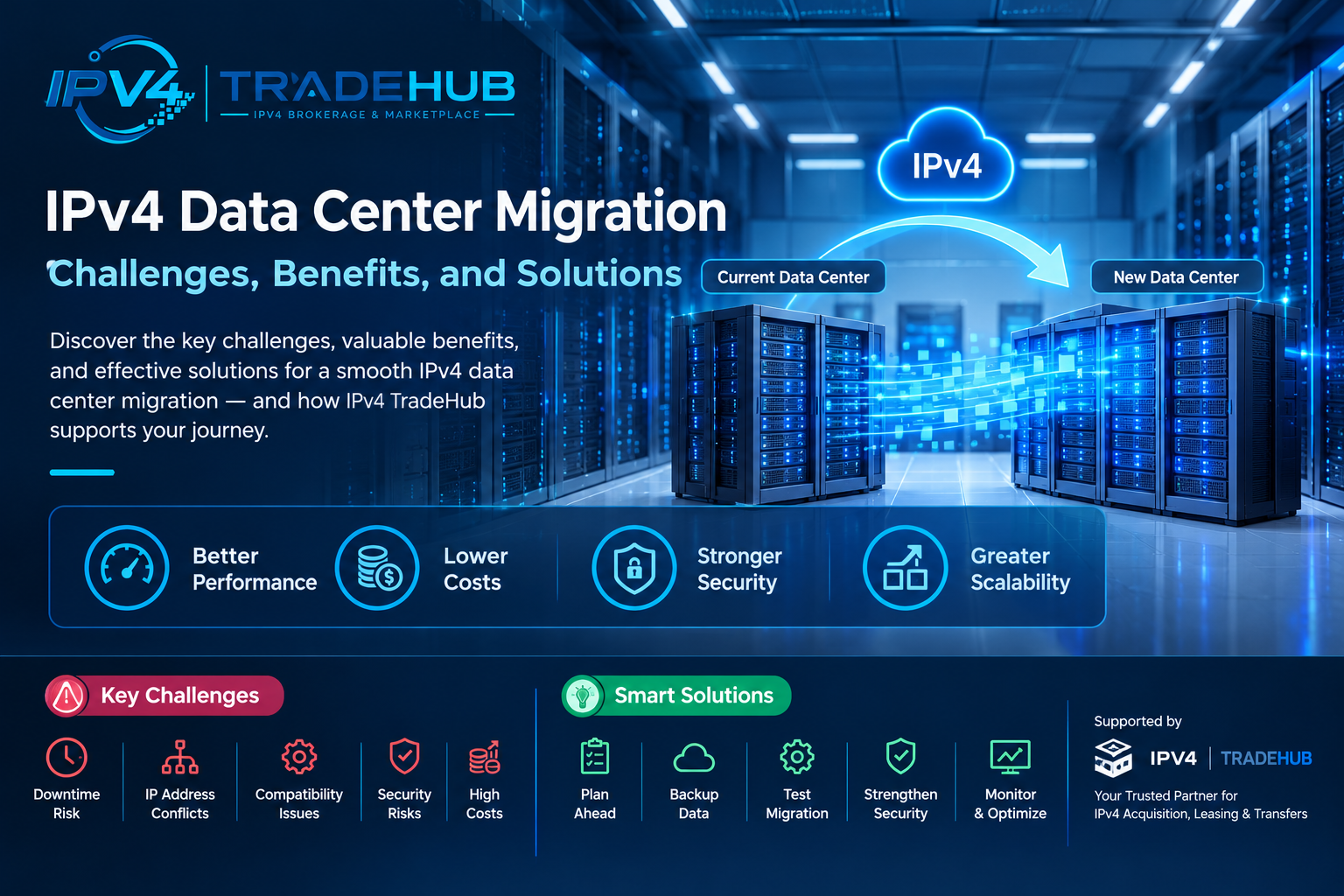
IPv4 data center migration is a critical process that involves transferring network infrastructure, systems, and services to a new environment while maintaining performance and reliability. As organizations modernize their IT infrastructure, migrating IPv4 networks presents several challenges, including IP address management, downtime, compatibility, and security risks. However, careful planning, effective migration strategies, and appropriate tools can minimize disruptions, improve network efficiency, and ensure a smooth and successful transition.
Overview of IPv4 Data Center Migration
The IPv4 data center migration program is the process of relocating the servers, programs, network arrangements, and information to a new data center without interrupting IPv4 connectivity. Businesses have the option of migration to improve performance of the network, modernization of the network, minimize operating costs, or meet growing business needs.
When you buy IPv4 address, always first learn the importance of migration. To migrate successfully, planning, management of IP addresses, and testing are important. In the relocation, the teams need to be careful so as not to ruin systems and minimal downtimes in services. Business organizations can provide reliable communications among devices with the help of a proper migration plan. This will also assist in ensuring valuable information and a stable network environment that will be in a position to sustain normal business activities as well as evolve in the future.
Important Benefits to Implement IPv4 Data Center Migration
Improved Network Performance
The IPv4 data center migration might improve performance as long as the business organizations are migrating to a better infrastructure. Applications are available with modern servers, better network equipment, as well as optimal routing. This helps employees to experience services without hassle and boosts effective business activities.
Reduced Operating Costs
A data center migration helps businesses to reduce operating costs by relocating to a more efficient data center. The most recent infrastructure can be maintained less frequently, is more efficient, and is less expensive in terms of hardware. Hence, planning also helps in the efficient use of the available resources and helps to avoid wastage of money.
Better Network Security
Migration should offer a possibility to check the current security configurations, as well as bolster network security. In the process, businesses are able to update firewalls, access controls and monitoring tools. These enhancements assist in the security of sensitive data, eradication of security threats and enabling safer interaction between linked systems.
More Scalability and Flexibility
When you lease IPv4 addresses, migration would assist businesses to be prepared for evolving technology requirements. You can use the network resources more efficiently by updating the infrastructure and the management of IP addresses, with teams using them. This facilitates the easy addition of more servers, applications, and user needs as the needs of the business increase.
Key Challenges of IPv4 Data Center Migration
Migration of IPv4 data centers may be problematic due to the need to relocate systems which may be connected and not interfere with business processes. Among the key issues are downtimes, which can cause interruptions to applications and affect users. When address ranges are not planned, they may also result in IP address conflicts. Systems may not be able to communicate properly as a result of data, configuration errors, and routing problems.
There is a risk in installing firewalls and access controls, which may result in security risks because they have not been updated during the migration process. The delays can be caused by compatibility issues between old and new equipment. Inadequate coordination and lack of technical resources can complicate the process. Backups, clear communication, careful planning, and testing can tend to minimize these risks and facilitate a more successful migration.
Smart Solutions to Tackle IPv4 Data Center Migration
Create a Detailed Migration Plan
Begin by surveying the current network, servers, applications and space for planning of IPv4 rent. Before transporting anything, have significant services, dependencies and potential risks identified. A proper migration timeline facilitates teams in assigning tasks, resource management, backup plans, and minimizing unforeseen disruptions.
Place Frequent Backups of Data
Complete backup of valuable data, programs settings and network profiles before migration. Store backups are important, and are essential, in a place that can be easily restored. Regular backup support will enable companies to resume quicker to ensure that they get back on their feet in the event of unexpected malfunctions, reduce data loss, and protect crucial operations.
Pretest the Network Migration
When testing, ensure that the test network connectivity, routing, firewall rules and application performance are tested and then migrate the production systems. These testing assist in diagnosing configuration issues as well as incompatibility issues early. End-to-end testing reduces the likelihood of migration, and gives technicians more confidence in the migration.
Strengthen Network Security
Check firewall policy, pre-migration and post-migration access policies, and monitors. Limit access to knowledge about valuable resources to users and devices authorized. Security control revision will help to protect sensitive information, provide limited access to un-authorization and secure network during the migration process.
Respond to Post-Migration Monitoring
Test network traffic, application response times, server performance and IPv4 performance of new migrations. Compare results and level of performance with the expected and solve any issues on time. It is through constant monitoring of the systems that the teams are able to determine whether the systems are operating as expected, services are available and where they need to be further improved.
FAQs: Commonly Asked Questions
1. Why do businesses migrate their IPv4 infrastructure?
Businesses migrate to enhance their scalability, modernisation, address optimization, growth, and raise the levels of reliability and network performance.
2. What are the main challenges of IPv4 data center migration?
The most frequent ones include: address scarcity, risk of downtime, compatibility with legacy, DNS diversion, security vulnerability, compliance, and migration costs.
3. How can businesses minimize downtime during IPv4 migration?
Downtime can be reduced in the business through proper planning, testing before deployment, preparing DNS, monitoring, and documentation.
Power Your Data Center Growth with Reliable IPv4 Resources
Planning a data center migration? Don’t let IPv4 address shortages slow your progress. IPv4 TradeHub helps businesses explore IPv4 purchasing, leasing, and transfer solutions tailored to their networking needs. Discover the right address resources, plan confidently, and prepare your infrastructure for tomorrow’s demands. Ready to get started? Visit IPv4 TradeHub to explore your options and connect with the team today.