The Internet still uses IPv4 even though IPv6 was introduced to solve the problem of limited IP addresses. IPv4 has been widely used for decades, and many existing devices, networks, and applications depend on it. Although IPv6 provides a much larger address space and improved features, its adoption has been gradual. The cost of upgrades, compatibility issues, and the use of technologies like NAT have slowed the transition to IPv6. This guide explains the insights why does the internet still use IPv4 despite IPv6 solutions.
Key Reasons Why the Internet Still Use IPv4
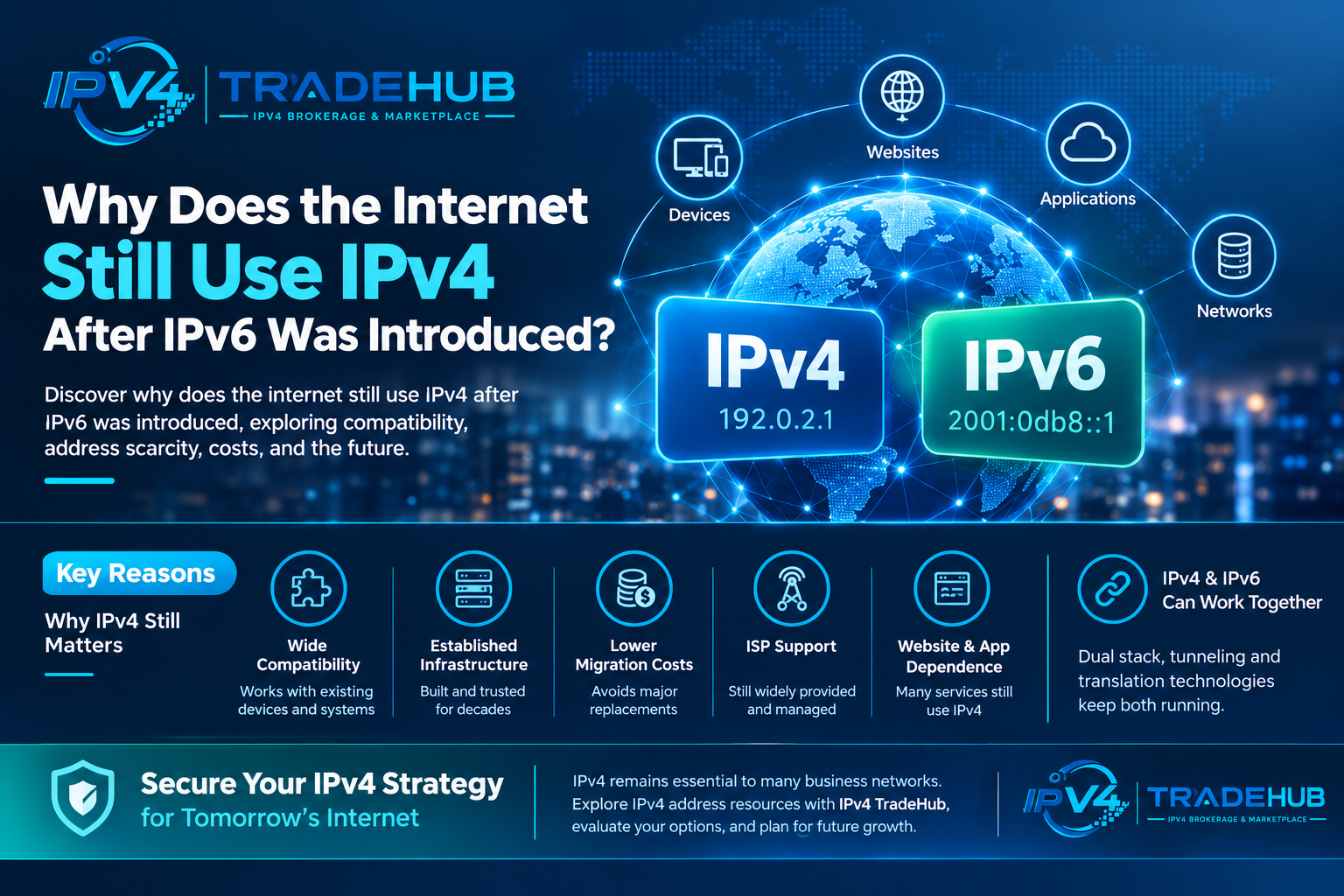
Wide Compatibility with Existing Devices
Almost all the older computers, smartphones, routers, and networking devices are capable to buy static IPv4 address. IPv4 has proven reliable, as many systems were common to use it in everyday internet usage. Restocking these systems altogether would be rather time-consuming, labor-intensive, and expensive.
Established Internet Infrastructure
IPv4 is over 20 years old, and a large part of the internet infrastructure is already IPv4-compatible. Organizations, internet service providers, and businesses have erected their networks using IPv4. Such infrastructure will not have to change unnecessarily, and can have a stable internet connection.
Lower Migration Costs
Businesses and service providers may find it costly to completely switch to IPv6 instead of IPv4. They may need to have new equipment, new software, technical training and network testing. The need to continue using IPv4 helps organizations to contain expenses as they progressively upgrade their network to IPv6.
Support From Internet Service Providers
Numerous internet service providers continue to provide IPv4 connections due to the continued reliance by customers and websites. Technologies like Carrier-Grade Network Address Translation (CGNAT) are also common to make public IPv4 addresses visible to more than one customer to allow them to increase the supply of addresses.
Continued Support from Websites and Applications
The idea to rent IPv4 address continues to be popular on many websites, online services, and applications. They have the ability to operate over a wide variety of networks and devices. Companies would prefer their services to be accessible to as many users as possible. Thus, IPv4 still has a significant role to play with IPv6.
Can IPv4 and IPv6 Work Together on the Internet?
Yes, IPv4 and IPv6 can work simultaneously on the internet. Both of them are popular in many networks to ensure their connection with various devices, websites, and online services. This configuration is known as dual stack, where a device or a network is compatible with IPv4 and IPv6. A device can typically connect to a website that supports both protocols, with the most appropriate option typically available to it. At the same time, other technologies, including tunneling, enable IPv6 traffic to traverse IPv4 networks.
There are also cases when translation tools are common to make IPv4-only systems and IPv6-only systems communicate. Nevertheless, IPv4 and IPv6 are not interchangeable per se as they have dissimilar address formats and packet structures. Co-running both protocols assists organizations in migrating slowly to IPv6 without loss of access to the current IPv4 services. Through this process, the transition becomes easier, and internet users are not disrupted as much.
Use of IPv4 After IPv6 for the Internet: Is It Worth It?
Yes, it is still possible to use IPv4 when IPv6 has already been implemented, depending on the requirements of an organization. The idea to lease IPv4 addresses is very popular as various sites, applications, devices, and networks still use it. The maintenance of IPv4 support also supports businesses to identify customers who have internet connections that do not entirely support IPv6. Nevertheless, IPv4 addresses are scarce, and it may be expensive to acquire them. It can also be costly to maintain IPv4 infrastructure in the long run, in terms of network management.
IPv6 has a substantially greater address space and can accommodate the long-term increasing number of internet-connected devices. This is why organizations are recommended to gradually transition to IPv6 as it maintains IPv4 where it is required. The most suitable strategy relies on compatibility and network needs coupled with budgets. In sum, IPv4 is useful nowadays, though it cannot be considered the right approach to a developing internet in the long run.
FAQs: Commonly Asked Questions
1. Is IPv4 older than IPv6?
Yes, IPv4 is older than IPv6. IPv4 became the address protocol of the internet, and IPv6 was created in order to overcome its shortcomings.
2. Why hasn’t IPv6 completely replaced IPv4?
IPv6 has not completely replaced IPv4 because networks, applications, devices, and service providers require time, investment, and coordinated upgrades.
3. Is IPv4 running out of addresses?
Address transfers and effective allocation are ever more important to businesses as most freely available IPv4 pools are being depleted at regional registries.
4. Can IPv4 and IPv6 work together?
Yes, with the use of dual-stack networking, IPv4 and IPv6 can run concurrently, so organizations can remain compatible, but at their own pace increase their IPv6 capacity.
Secure Your IPv4 Strategy for Tomorrow’s Internet
IPv4 remains essential to many business networks, even as IPv6 adoption accelerates. Understanding your address requirements can help you plan confidently, maintain compatibility, and prepare for future growth. Explore IPv4 address resources with IPv4 TradeHub, evaluate your options, and take a smarter approach to your organization’s evolving connectivity needs.