
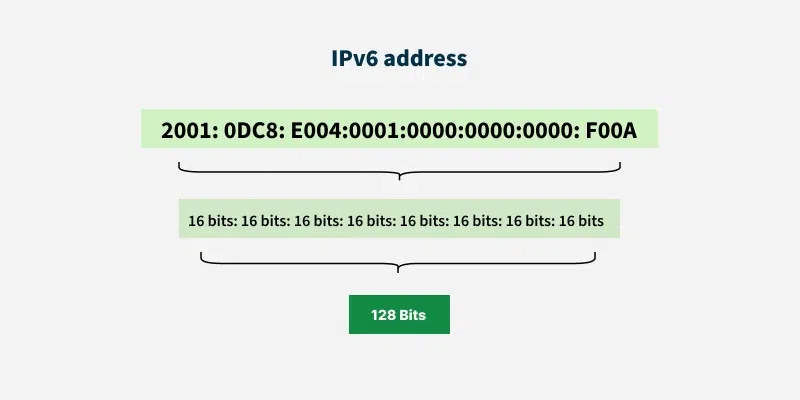
Internet Protocol, or IP, is the fundamental system that enables devices to locate and exchange data across the internet. This communication has been getting support through IPv4 for many years. It has a small number of addresses that are currently almost depleted. The next generation internet protocol is IPv6, which is aiming at offering a vastly larger address space, as well as being more efficient. Implementation of IPv6 is significant to businesses, internet service providers, and the development of the global internet. Knowing what is IPv6 contribute to guaranteeing scalability, security and dependable connectivity in the future over all contemporary networks.
Overview of What is IPv6 Addresses
IPv6 addresses are the next generation of internet addressing. They recognize network devices and enable them to interact with one another. IPv6 works as an improvement of IPv4, which has a certain limitation in address space. It allows modern growth since it has a significantly larger address pool. Meanwhile, it enhances business, service provider and user routing, security and performance.
New technologies, such as cloud services, mobile networks, and smart devices, also have the support of IPv6. With the growing internet, IPv6 guarantees stable connectivity, long-term scalability, and enhanced network management in global digital environments. It is of great help for the future-oriented companies that need stable, efficient, and secure online operation worldwide today at scale and magnitude.
Key Features to Know About IPv6 Addresses
Massive Address Capacity
IPv6 has a vast address space, thus billions of devices have been interconnect without conflict. This eliminates the use of address sharing. Businesses become able to have easier network design, enhanced performance and expansion. The entire structure allows long-term scale and keeps networks flexible and readily accessible to future demand in worldwide use.
Efficient Network Routing
The idea to buy IPv6 address improves efficiency in routing as the network complexity is fewer. The information travels in smoother routes, contributing to performance and high speed. Service providers handle traffic with ease. To the customers, it is an easier connection and less time-wasting. Thus, the assurance of accessing online services on business platforms, applications, and daily digital tools for the global user experience.
Built-In Security Support
IPv6 also comes with an inbuilt security, and therefore, the encrypted communication can be easily implemented. This helps in securing information when passing it across. IPv6 offers a better foundation, but security is once again dependent on a good setup. Firms enjoy a more secure connectivity, enhance their trust, and secure their digital activities at the network, device, user and service levels worldwide.
Automatic Configuration
Concept to lease IPv6 addresses also allows automatic configuration of addresses, which limits the manual effort of network teams. Devices can be added to networks without complicated procedures. This reduces mistakes and wastage of time. Modern infrastructure, cloud services, mobile platforms, and other modern systems enable businesses to be set up faster, managed more easily, and scale more easily as they grow and evolve nowadays.
Mobile and Cloud Readiness
IPv6 supports mobile and cloud networks as compared to older systems. It supports the transit of networks without disconnection. This is significant to mobile services and remote work. Companies provide users with the same experiences, consistent access, and reliable performance.
Significant Benefits of Investing in IPv6 Addresses
Long-Term Business Growth
Investing in the IPV6 addresses will equip the businesses with future expansions. IPv6 is of permanent value as IPv4 is becoming scarce. Early adoption minimizes the expenditure in the future. Organisations reserve the growth space, sustain new services, and prevent organisational constraints. It slows down advances and future complexity of global networks, digital platforms, customers, partners, and investors.
Future Market Relevance
IPv6 addresses have been adapted to the current digital applications such as cloud, streaming and intelligent systems. Investors become relevant in future-oriented markets. The demand is still increasing with the connectivity. This provides opportunities for consistent returns, better positioning and long-term relevancy in digital infrastructure markets by region, industry, platform, network, provider, and user globally.
Improved Business Trust
The possession of IPv6 selling enhances the credibility and preparedness of the business. Clients and partners would choose future-oriented networks. It is a sign of order and organization. The corporations gain credibility, easier transactions and alignment with the international standards of technology. Hence, it defines long-term digital collaboration among businesses, governments, providers, platforms, services, users, markets, regions and the global world.
Lower Operational Risk
IPv6 investment eliminates the use of short-term solutions such as address sharing. This reduces the technical risk and maintenance work. Addressing is better in networks. In the long run, companies conserve resources, streamline operations and concentrate on innovation. They do not bother about old constraints and workarounds in expanding digital environments, platforms, services, and markets worldwide nowadays.
Challenges and Limitations of IPv6 Addresses
There are several challenges associated with the adoption of IPv6 despite its benefits. Most networks are still using IPv4, which means that they must manage two systems. This increases cost and complexity. There are some old hardware and software that require updating or replacement. Staff training is time-consuming and requires planning. The problem of compatibility can be observed in transition periods. Security features need to be set in place and not assumed. Smaller organizations might lag because of budgetary reasons.
International implementation is also unequal, which forms mixed settings. Although IPv6 faces the problem of address shortages, planning, testing, and a long-term strategy. Each of them must be put in place to ensure a seamless, reliable application throughout the business networks. The support of partners, clear timelines, and leadership commitment can mitigate risks in change in organizations all over the world today in the long run.
Unlock the Full Value of Your IP Assets with IPv4 TradeHub
IPv4 TradeHub empowers organizations to buy, sell, and lease IPv4 addresses securely while planning a smooth transition to IPv6. Our expert-driven marketplace ensures transparent pricing, regulatory compliance, and rapid transfers. Whether you are scaling networks, supporting legacy systems, or monetizing IPv4 assets, our team delivers reliability, trust, and global reach. Partner with us today to optimize IP resources and reduce costs.