
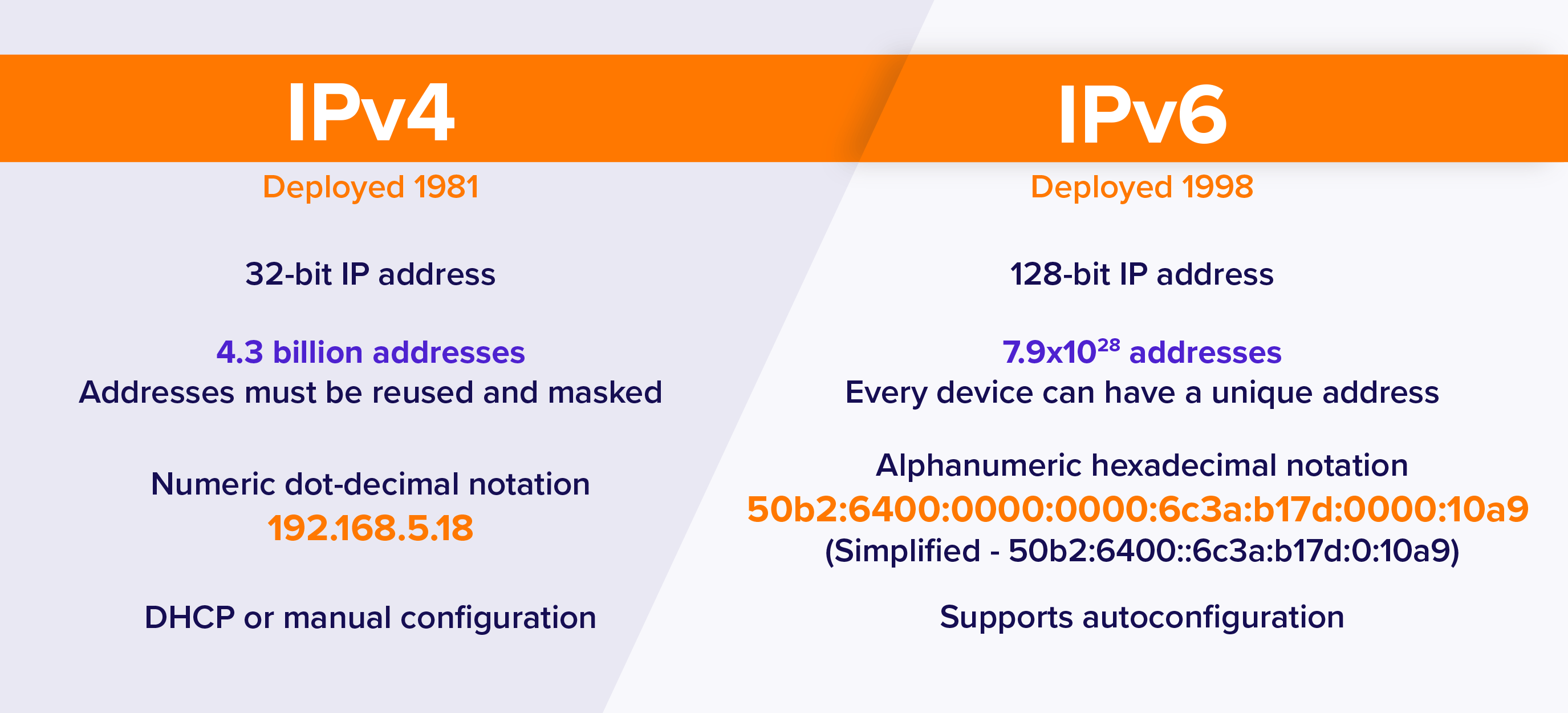
The internet has also developed at a very high rate in the past few decades and so has its address system. Internet Protocol (IP) addresses play a crucial role in identifying devices and facilitating communication within networks. There are two main types of IP in the modern day: IPv4 and IPv6. The knowledge of the differences between IPv4 and IPv6 address is important to businesses, IT experts and entities intending to expand digitally. This guide explores the differences between IPv4 and IPv6 address and the significance of the two protocols in the future to enable the reader to make smart choices in the modern networking world.
Key Differences Between IPv4 and IPv6 Address
Address Length and Capacity
IPv4 has 32-bit addresses, and IPv6 has 128-bit addresses. This provides IPv6 with a significantly large address space. Companies can participate in connecting numerous gadgets without encountering space constraints. It also supports expanding cloud, mobile, and smart systems in the digital demand and innovation needs in the global markets in the future.
Address Format
IPv4 is established in numbers that are spaced out with dots. IPv6 employs the usage of numbers and letters with a colon separator. This modern format enhances flexibility as well as new network designs. It eases strain as well on the network teams dealing with large and multifaceted business environments. This supports the service providers to scale operations swiftly and assuredly all around the world.
Modern Security Features
IPv4 also requires additional tools, such as Network Address Translation, for protection. IPv6 also has security constructed using IPsec. This facilitates more secure sharing of information, and it gains customer trust. Businesses will be able to increase compliance, secure information and enhance secure digital services. It is also enhancing brand value in competitive international markets through collaboration today.
Network Performance
When you buy IPv4 address know that its routing may be slow due to address constraints. IPv6 provides an effective route and direct linkage with the device. This enhances speed, minimization of delays, and provides real-time services. Better user experiences and a stable online platform would benefit businesses. This results in improved levels of customer satisfaction and improved growth capability of firms online.
Automatic Configuration
Before you lease IPv4 addresses know that it can be labour-intensive. IPv6 can be operated in automatic address configuration. This saves time and minimizes errors and minimizes operating expenses. IT teams can roll out networks much faster and maintain a high ability to support remote work, cloud and digital transformation objectives. It also enhances flexibility in the process of expanding businesses and mergers between different regions in the world.
Implementation and Interoperability
In numerous systems, IPv4 is still in use. IPv6 is on the increase, but the transition requires planning. Dual-stack solutions are useful in facilitating the use of both versions by businesses. This gives continuity, helps retain investment and facilitates easy upgrade without substantial upset. It also minimises risk in migration and long-term technology trust among the leaders everywhere.
Scalability and Future Ready
As you rent IPv4 address know that it cannot accommodate new devices easily. IPv6 is intended to be used in the Internet of Things and smart industries. It allows making millions of connections, automation and innovation. This aids businesses to develop new services, enhance efficiency and compete in electronic economies. It unseals sources of revenue and assists in long-term strategic expansion business plans.
Future of IPv4 and IPv6 Addresses in the Market
IPv4 will continue to operate for many years because of existing systems and investments. Nevertheless, the demands of the market are moving towards IPv6 because of the increase in devices, cloud, and online services. Individual governments, telecommunications companies, and businesses are adopting it more for better scalability and security. Those businesses which embrace IPv6 early are also able to gain a competitive edge, support innovation and enhance global connectivity.
The two will co-exist in the future, yet IPv6 will spearhead the new network development and intelligent infrastructure products. This change will open opportunities to the service providers, technology vendors and investors. It will also spur digital inclusion and economic development amongst the emerging markets around the world.
FAQs: Common Questions People Often Ask
1. What is the main difference between IPv4 and IPv6?
IPv4 has an address capacity of 32 bits, and IPv6 has an address capacity of 128 bits; as such, IPv6 has many more unique IP addresses for devices globally.
2. Why is IPv6 replacing IPv4?
IPv4 is being substituted by IPv6 because of address exhaustion and enhanced security, performance, and support of the new technologies, such as IoT and cloud computing.
3. Can IPv4 and IPv6 work together?
Yes, they may cooperate on dual-stack networks, tunneling and translation technology that enables communication between them when there is a transition.
4. Is IPv6 more secure than IPv4?
Yes, IPv6 has inbuilt security measures such as IPsec, which can encrypt and authenticate, making it safer than the classical implementation of IPv4.
Upgrade Your Network with IPV4 TradeHub Today
Stay ahead in the digital world with reliable, secure, and scalable IP solutions from IPV4 TradeHub. Whether you need premium IPv4 resources or expert guidance for a smooth IPv6 transition, our team delivers tailored solutions to meet your business needs. Boost connectivity, enhance security, and ensure uninterrupted growth with trusted IP address services.