
The internet operates under IP (Internet Protocol) addresses, which allow the device to smoothly communicate. There are two major versions of IP addresses, namely IPv4 and IPv6. Although the internet has been supported by IPv4 for decades, IPv6 is quickly becoming popular as the internet is experiencing a high demand for IP addresses. Business, IT professionals and network administrators need to understand the differences between these protocols to make informed decisions regarding scalability, security, and future readiness. This guide explores more insights about key aspects to differentiate IPv4 and IPv6 address.
Reasons to Differentiate IPv4 and IPv6 Addresses
In the modern, fast-changing digital world, it is important to know the difference between IPv4 and IPv6 addresses. IPv4 cannot support the increased number of devices because of its scarce address space. Thus, IPv6 has more capacity and is more up-to-date. Knowing how to differentiate IPv4 and IPv6 address helps to plan the network effectively. It provides smooth connections and enhances security so that businesses can future-proof their networks.
This transparency also helps the IT staff to control the resources and prevent address conflicts. It uses the superior features of IPv6, like auto-configuration and improved routing. Being aware of these disparities enables improved decision-making in network design and the adoption of technology.
Differentiate IPv4 and IPv6 Address: Key Elements
Address Format
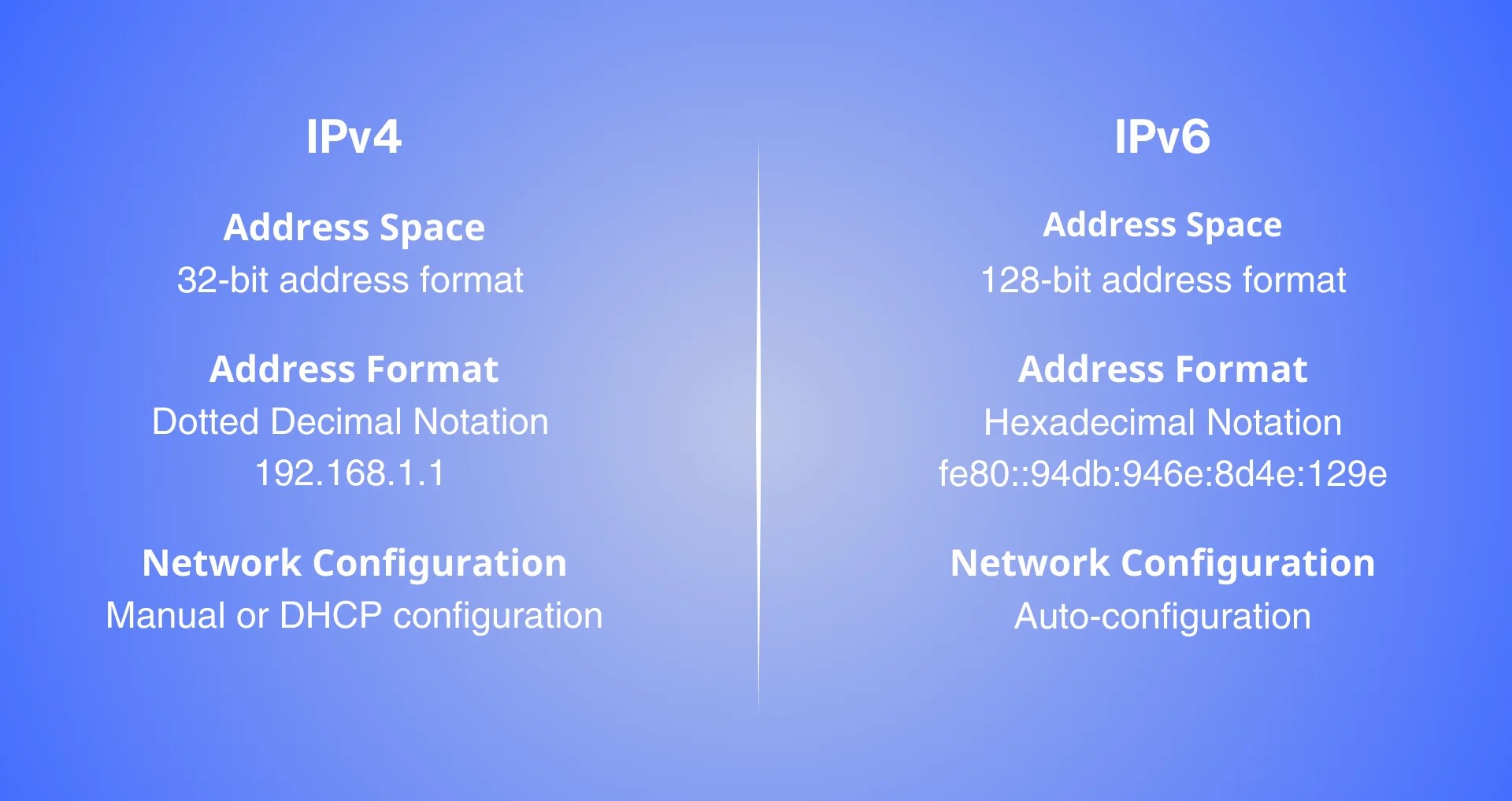
The IPv4 format has a 32-bit format expressed in four decimal numbers followed by periods, whereas the IPv6 format has a 128-bit format expressed in hexadecimal characters along with colons. This difference enables IPv6 to offer an enormously greater address space and support the current networking needs effectively.
Address Capacity
IPv4 has the capacity to support about 4.3 billion addresses, which is inadequate to global connection demands. By contrast, when you buy IPv6 address know that it is capable of 340 undecillion unique addresses. This way, every single device has a unique identifier, a requirement that is essential to the Internet of Things (IoT) and huge enterprise networks.
Header Complexity
IPv4 headers are comparably easy but need configuration by hand or DHCP. IPv6 has simplified headers and a few fields, which makes routing more efficient and allows such features as built-in security and multicast addresses. This saves on overhead and enhances network performance.
Security Features
IPv4 does not provide any built-in encryption and authentication tools, and they depend on other protocols to be secure. However, IPv6 has built-in IPsec that provides end-to-end data protection and authentication. It provides stronger security of communications across networks and is in line with current cybersecurity needs.
Address Configuration
IPv4 normally involves manual address configuration or DHCP. IPv6 also allows stateless address autoconfiguration (SLAAC) and DHCPv6. This is making it easier to deploy, lessening the burden on the administrator, and enabling devices to acquire addresses without human intervention automatically.
Routing Efficiency
Address exhaustion and network address translation (NAT) can make IPv4 routing a complicated process. The process to lease IPv4 addresses eases routing by hierarchical addresses and removes the use of NAT. This enhances the speed of the processing of packets and, overall, the network performance and scalability.
IPv4 and IPv6 Address: Which One is Best?
Choosing between IPv4 and IPv6 is based on the requirements of the network and the long-term scaling. The idea to rent IPv4 address is still popular and helps to support smaller networks. Hence, IPv6 can be easily implemented with modern enterprises and connecting the world with an enormous address space, simpler configuration, and built-in security protocols.
IPv6 removes the restrictions of address space depletion and dependency on NAT. This allows smoother routing and allows the network to be designed to meet the needs of the future. In the case of organizations that have adopted digital transformation, IPv6 guarantees an uninterrupted interconnection of connected devices and services. This offers flexibility, scalability, and high security that IPv4 cannot support.
Factors to Consider When Choosing IPv4 or IPv6 Addresses
Address Availability
The IPv4 addresses are finite, and they are approaching depletion, whereas IPv6 has an almost unlimited pool. Organizations should evaluate present and future device demands so that they have adequate addressing capacity. It would not experience network shortages or have to implement expensive address reuse schemes.
Network Compatibility
IPv4 is extensively used in legacy systems, routers and software. The implementation of IPv6 can lead to the need to update infrastructure and make it compatible with the protocols in use. Interoperability testing minimises integration problems and aids easy migration of address types.
Security Features
When you buy IPv6 address block know that it has such a built-in feature as IPsec encryption and authentication, which improves security. Similar protection can be done using IPv4, though it might need extra setups. The presence of built-in security advantages will assist organizations in keeping the network communications safe.
Performance and Management
IPv6 eases the management of networks by auto-configuration and hierarchical addressing, which are more efficient in the routing process. The scalability of IPv4 might require manual configuration or NAT. Performance and administrative ease evaluation guarantee ideal operation and less effort in maintenance in the long term.
FAQs: Common Questions People Often Ask
1. What is the main difference between IPv4 and IPv6?
IPv4 has 32-bit addresses, whereas IPv6 has 128-bit addresses, which offer a much better IP capacity and performance.
2. Is IPv6 faster than IPv4?
Yes, IPv6 may provide better routing and reduce latency because of the simplified headers and better network processing facilities.
3. Why is IPv6 replacing IPv4?
IPv6 substitutes IPv4 because of the address depletion, enhanced security, scalability, and capacity to meet contemporary internet requirements effectively.
Let Your Network Function Smooth with IPV4 TradeHub Today
Take control of your network infrastructure with IPV4 TradeHub, your trusted partner for reliable and scalable IP solutions. Whether you are looking to buy, lease, or sell IPv4 resources, we provide seamless services tailored to your business needs. Our expert team ensures secure transactions, competitive pricing, and unmatched support to keep your network running efficiently.