
The demand for IPv4 addresses continues to remain strong as businesses, hosting providers, cloud platforms, ISPs, and other network operators rely on IPv4 connectivity for their online infrastructure. Although IPv6 adoption continues to grow, IPv4 remains an important part of the global internet.
For organizations that need additional IPv4 space but do not want to purchase an entire address block, leasing can be a practical alternative. Instead of making a large upfront investment, businesses can obtain temporary usage rights to IPv4 address space for an agreed period.
But How IPv4 Leasing Works is often misunderstood, particularly by businesses entering the IP address market for the first time. Leasing involves more than simply receiving a list of IP addresses. It can involve contracts, routing, address ownership, registry information, network configuration, reputation checks, and ongoing management.
This guide explains the process in simple terms and covers what businesses should consider before entering an IPv4 lease agreement.
What Is IPv4 Leasing?
IPv4 leasing is an arrangement in which the owner of an IPv4 address block allows another organization to use that address space for a specific period.
The important distinction is between ownership and usage. In a typical lease, the original holder retains ownership of the IPv4 block while the customer receives permission to use the addresses according to the terms of the agreement.
The leased addresses may be used for different legitimate purposes, including servers, hosting infrastructure, cloud services, network expansion, applications, VPN infrastructure, and other internet-facing systems.
The exact terms depend on the provider and agreement. These terms can include the number of addresses, lease duration, monthly or annual price, acceptable-use requirements, technical responsibilities, renewal conditions, and procedures for ending the lease.
For businesses that need IPv4 resources without purchasing them permanently, leasing can provide greater flexibility.
Why Do Businesses Lease IPv4 Addresses?
IPv4 addresses are limited resources, and obtaining suitable address space can be challenging for organizations that need to expand their infrastructure.
Buying an IPv4 block can require a significant upfront investment. Leasing provides another option by allowing an organization to pay for access during the period when the addresses are needed.
Some common reasons businesses choose leasing include:
Lower Initial Investment
Purchasing an IPv4 block means paying for an asset upfront. Leasing spreads the cost over the agreed rental period, which may make budgeting easier for businesses with limited capital.
Flexible Network Expansion
A company may need additional addresses because it is launching new servers, expanding cloud infrastructure, entering a new market, or increasing its hosting capacity. Leasing can provide additional resources without requiring a permanent purchase.
Temporary Requirements
Not every IPv4 requirement is permanent. A business working on a temporary infrastructure project may not want to purchase a block that it will no longer need after the project ends.
Faster Access to Address Space
Businesses can explore available blocks through an IPv4 provider rather than waiting to acquire address space through traditional allocation processes.
Testing and Infrastructure Projects
Development environments, network testing, migration projects, and other technical operations may require additional IPv4 resources for a defined period.
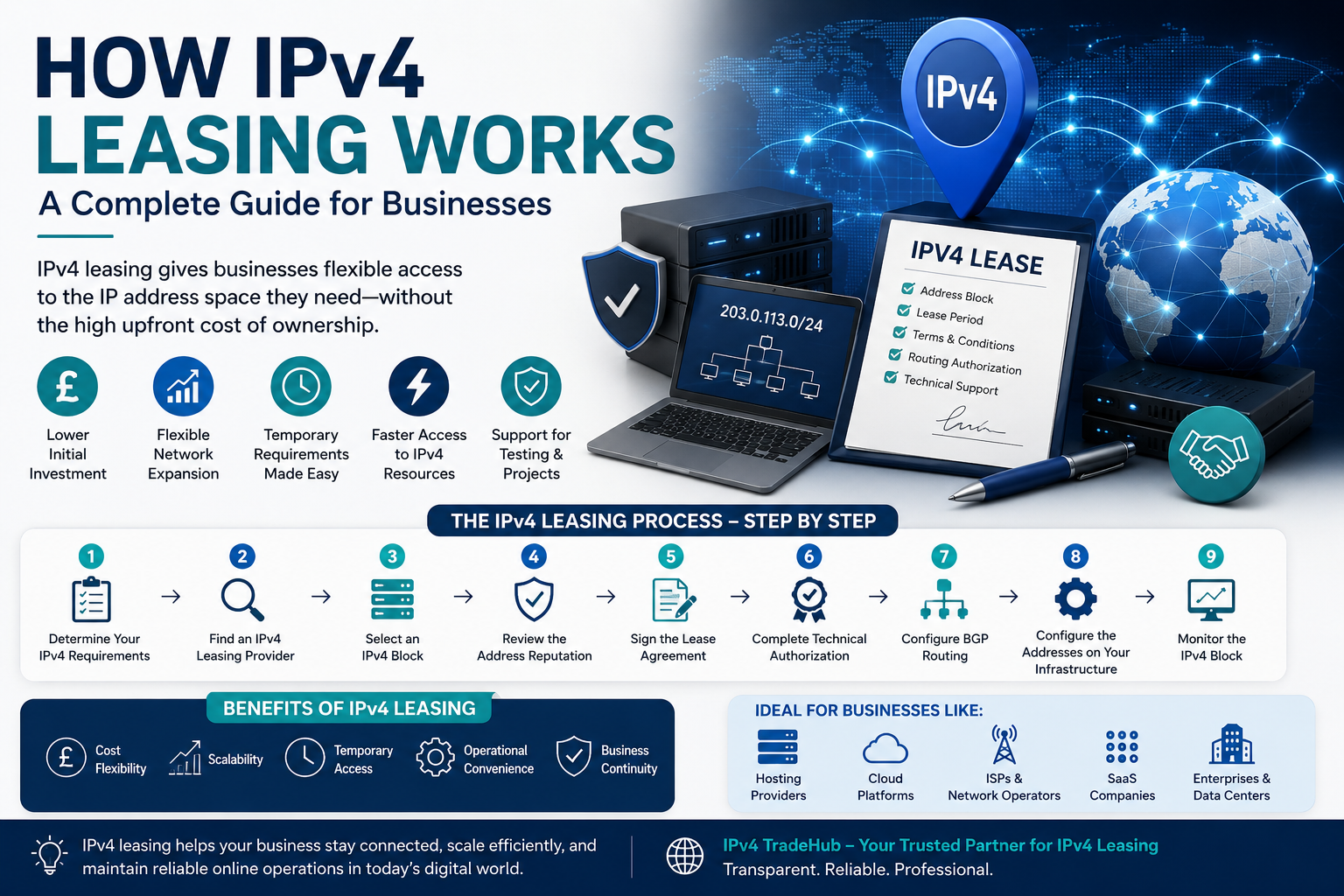
How IPv4 Leasing Works Step by Step
Understanding the leasing process makes it easier to evaluate providers and avoid unexpected problems. While the exact procedure can differ, the process generally follows several important stages.
1. Determine Your IPv4 Requirements
The first step is to establish how much address space your organization actually needs.
You may require a smaller block for a limited infrastructure project or a larger allocation for servers, hosting, cloud platforms, or network operations.
Before contacting a provider, consider:
- How many addresses are required?
- What will the addresses be used for?
- How long will they be needed?
- Where will the infrastructure be hosted?
- Do you need a particular regional registry?
- Will you announce the addresses through your own ASN?
- Do you require specific technical or reputation requirements?
Having clear requirements can make the selection process much easier.
2. Find an IPv4 Leasing Provider
Once your requirements are established, you can compare providers that offer IPv4 leasing services.
A reliable provider should be transparent about the address blocks being offered, pricing, contract terms, technical requirements, and support.
It is also important to understand who controls the address space and how the provider handles registry documentation and routing authorization.
IPv4 TradeHub provides IPv4 buying, selling, and leasing solutions for businesses and network operators. The company also states that it supports transactions across major Regional Internet Registries and provides assistance with the associated process.
3. Select an IPv4 Block
After choosing a provider, you can select an available IPv4 block that matches your requirements.
The block size is an important consideration. A business should avoid paying for significantly more addresses than it needs while also allowing enough room for expected growth.
At this stage, technical checks are particularly important. Businesses should consider the history and reputation of the addresses before deploying them.
4. Review the Address Reputation
Not all IPv4 addresses have the same history.
An address may have previously been associated with websites, email systems, hosting services, or other online infrastructure. If an address has a poor reputation or appears on relevant blocklists, it could create operational problems.
Before accepting a block, businesses should consider checking:
- IP blacklist status
- Abuse history
- Reputation signals
- Routing information
- Registry records
- Reverse DNS requirements
- RPKI and routing authorization where applicable
A reputable provider should be willing to explain the condition and history of the address space.
5. Sign the Lease Agreement
After selecting a suitable block, the customer and provider enter into a lease agreement.
The agreement should clearly explain the responsibilities of both parties.
Important terms may include:
- IPv4 block size
- Lease duration
- Payment schedule
- Renewal terms
- Acceptable-use policy
- Abuse handling
- Technical support
- Replacement procedures
- Termination conditions
- Responsibility for routing configuration
Reading these terms carefully helps prevent misunderstandings later.
6. Complete Technical Authorization
An IPv4 lease does not automatically mean that the customer can announce the addresses from its network.
The necessary routing and authorization information must be correctly configured. Depending on the arrangement, this can involve Letter of Authorization documentation, Internet Routing Registry information, RPKI/ROA configuration, and coordination with the customer’s upstream provider.
The exact requirements vary according to the network setup, registry environment, and provider.
7. Configure BGP Routing
For organizations that need to announce leased IPv4 space, Border Gateway Protocol (BGP) is an important part of the process.
BGP allows networks to advertise routes to other networks across the internet. The customer may need to announce the leased prefix from its own Autonomous System Number (ASN), depending on the arrangement.
The upstream provider may also require documentation confirming that the customer is authorized to use the address space.
Incorrect routing information can prevent the addresses from being reachable, so technical configuration should be completed carefully.
8. Configure the Addresses on Your Infrastructure
Once routing is ready, the IPv4 addresses can be configured on the relevant infrastructure.
This could include:
- Dedicated servers
- Cloud infrastructure
- Hosting environments
- Network equipment
- Applications
- VPN systems
- Other internet-facing services
The network administrator should verify connectivity and confirm that the addresses are working as expected.
9. Monitor the IPv4 Block
Leasing does not end once the addresses become operational.
Businesses should continue monitoring their IPv4 resources for routing problems, abuse reports, blacklist activity, and other reputation issues.
Good monitoring can help identify problems before they affect applications, email delivery, customers, or network availability.
What Is the Difference Between Leasing and Buying IPv4?
The main difference is ownership.
When a company buys an IPv4 block through a valid transfer process, ownership of the address resources may be transferred according to the applicable registry policies and transaction requirements.
With leasing, the original holder generally retains ownership while another organization receives permission to use the addresses for a defined period.
Leasing therefore tends to be more suitable when flexibility and lower initial costs are important. Purchasing can make more sense for organizations that expect to require the address space for a long time and want permanent control.
Neither option is automatically better. The right choice depends on the organization’s budget, technical requirements, expected usage period, and long-term network strategy.
What Should You Check Before Leasing IPv4?
Choosing an IPv4 provider requires more than comparing monthly prices.
First, confirm that the provider can demonstrate legitimate control over the address space. You should also understand how routing authorization and registry-related documentation will be handled.
Next, investigate the reputation of the addresses. A low-cost block may become expensive if it causes connectivity, email delivery, or reputation problems.
It is also important to understand the provider’s support process. Ask what happens if an address becomes unusable, receives abuse complaints, or experiences routing problems.
Finally, read the agreement carefully. Make sure the lease duration, renewal process, payment terms, acceptable-use requirements, and termination conditions are clearly documented.
Benefits of IPv4 Leasing
For many organizations, IPv4 leasing offers several practical advantages.
Cost flexibility: Businesses can avoid the larger upfront expense associated with purchasing address space.
Scalability: Additional addresses can be obtained when network requirements increase.
Temporary access: Organizations can use address space for a specific period without making a permanent acquisition.
Operational convenience: A specialist provider can help with documentation and technical coordination.
Business continuity: Companies can maintain access to IPv4 infrastructure while gradually developing their IPv6 strategy.
For organizations that want to lease ipv4 addresses, choosing a provider that offers clear documentation, reliable support, and appropriate technical checks is essential.
Is IPv4 Leasing Suitable for Your Business?
IPv4 leasing can be useful for organizations that need additional public IPv4 space but do not want to purchase an address block outright.
It can be particularly relevant for hosting companies, cloud providers, ISPs, SaaS businesses, enterprises, data centers, VPN providers, and organizations expanding their network infrastructure.
However, the decision should be based on actual requirements rather than simply obtaining as many addresses as possible.
If your organization only needs a small number of addresses for a short period, leasing may be more practical than buying. If you expect to require the same address space for many years, purchasing may deserve consideration.
Before deciding to lease ipv4 address space, evaluate your infrastructure, budget, expected lease duration, routing requirements, and the reputation of the available addresses.
Choosing a Reliable IPv4 Leasing Partner
The provider you choose can have a major impact on your experience.
Look for a company that provides transparent information about its IPv4 inventory, agreements, technical procedures, and support. The provider should also understand registry requirements and be able to explain how routing authorization will be handled.
IPv4 TradeHub focuses on IPv4 buying, selling, and leasing services and provides support for businesses and network operators looking for IPv4 resources.
A professional provider should make the process understandable rather than leaving customers to solve complex registry and routing issues alone.
Final Thoughts
Understanding How IPv4 Leasing Works is important before committing to an IPv4 rental agreement. The process typically involves identifying your requirements, selecting a suitable address block, checking its reputation, reviewing the contract, completing the necessary authorization, configuring routing, and monitoring the addresses after deployment.
Leasing can provide businesses with a flexible way to access IPv4 resources without purchasing them outright. However, price should not be the only factor when choosing a provider. Address reputation, technical support, documentation, routing requirements, and contract conditions are equally important.
As organizations continue to operate in an environment where IPv4 remains valuable while IPv6 adoption grows, a well-planned IPv4 leasing strategy can help businesses maintain reliable connectivity and scale their infrastructure efficiently.
Frequently Asked Questions
1. What does IPv4 leasing mean?
IPv4 leasing means obtaining temporary usage rights to an IPv4 address block from its owner or a leasing provider. The customer pays an agreed fee for the defined lease period while ownership generally remains with the original holder.
2. How long does an IPv4 lease usually last?
The duration depends on the provider and agreement. Some arrangements can be short-term, while others may run for several months or multiple years. Always check renewal and termination conditions before signing.
3. Is IPv4 leasing the same as buying IPv4?
No. Leasing provides temporary usage rights, while buying can involve transferring ownership through an applicable transfer process. The financial and operational implications are therefore different.
4. Can leased IPv4 addresses be used for servers?
Yes. Leased IPv4 addresses can be used for legitimate infrastructure such as servers, hosting environments, cloud systems, applications, and other internet-facing services, subject to the lease agreement and applicable policies.
5. Can I use leased IPv4 addresses with my own ASN?
In many arrangements, leased address space can be announced from the customer’s ASN when the appropriate authorization and routing configuration are in place. The exact requirements depend on the provider, network, and registry environment.
6. Should I check IPv4 reputation before leasing?
Yes. Checking the history and reputation of a block is an important step. Blacklist listings or previous abuse activity can potentially create operational problems, so businesses should perform appropriate checks before deployment.
7. What happens when an IPv4 lease expires?
The customer normally loses the right to use the leased address space unless the agreement is renewed. The exact process should be explained in the lease contract, including any notice period and removal of routing announcements.
8. Is IPv4 leasing cheaper than buying?
Leasing generally requires a lower initial financial commitment because the customer pays for usage over time rather than purchasing the address space outright. However, the total long-term cost depends on the lease price and duration.
9. Who can benefit from IPv4 leasing?
Businesses, hosting providers, cloud companies, ISPs, data centers, SaaS providers, and network operators may benefit from leasing when they need additional IPv4 resources without making a permanent purchase.
10. How can I start an IPv4 lease?
Start by determining your required block size, intended use, lease duration, and technical requirements. Then compare reputable providers, verify the address block, review the agreement, and confirm how routing and technical authorization will be handled before deployment.