Computers and devices communicate across the Internet by assigning them a unique IP address. Although IPv6 has been implemented for a long time, the widespread adoption of IPv4 has made this available to all users, and because of the huge number of connected devices and users, the addresses available for the latter protocol are now in use. To cope with this challenge, all sizes of businesses started adopting modern solutions for IPv6 addresses. Knowing what is an IPv6 address is important to understand how this solution works in system connectivity.
Overview of What Is an IPv6 Address
The Internet Protocol (IP) is the latest version of the protocol that helps to identify devices on the Internet based on an address. It’s primary goal was to replace IPv4 because of the address space limitation. In IPv6, addresses are a mixture of letters and numbers, with colons between the address segments. This system provides much more specific addresses for computers, smart devices, smartphones, and websites.
IPv6 also increases internet performance, security, and connection efficiency. It helps allot the ever-expanding number of internet gadgets in the world today. In the present day many network services and internet services are operating both with IPv6 and IPv4 in order to communicate and grow in the future.
IPv6 Address: Complete Structure Explained
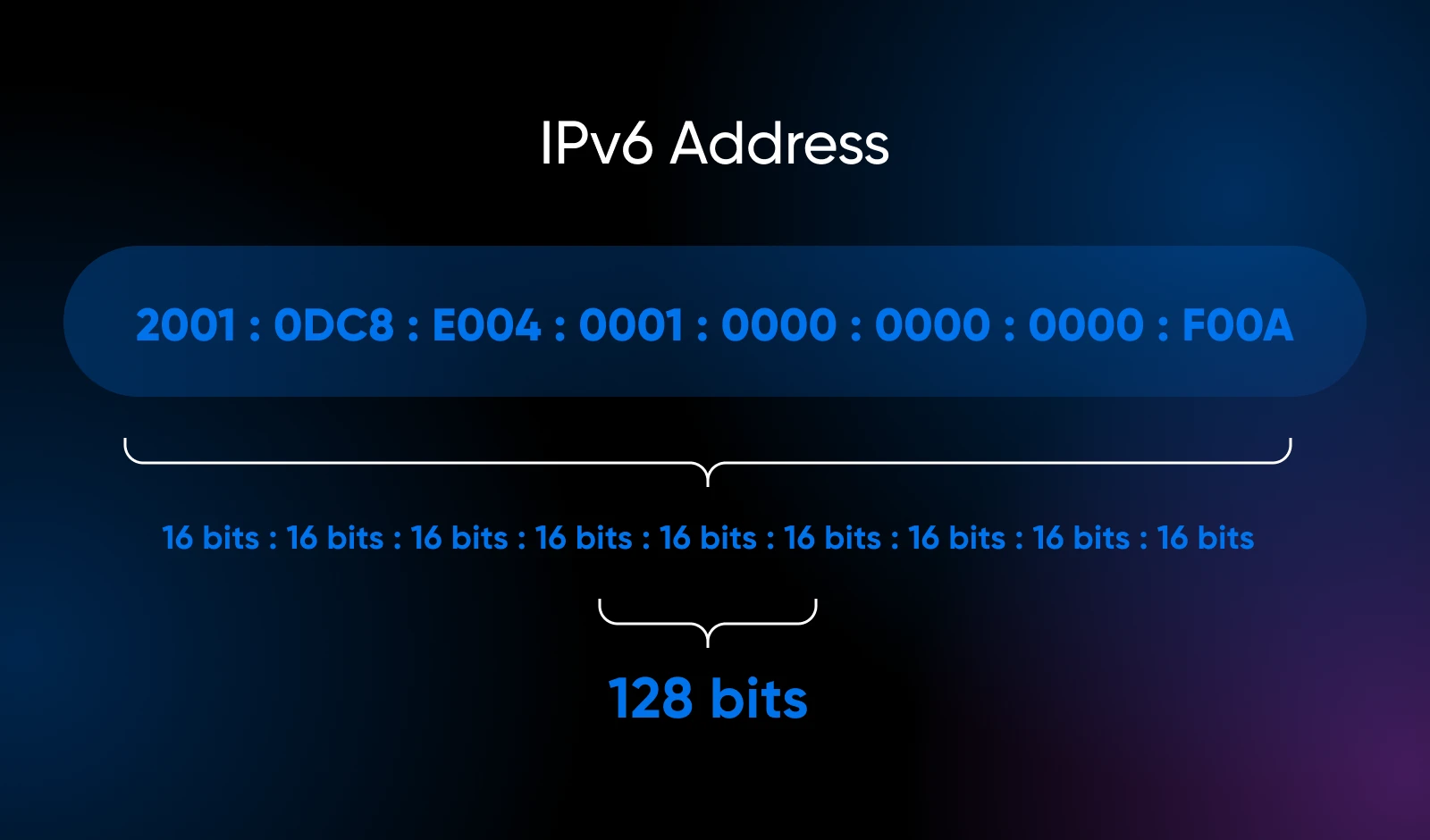
There are 8 sets of characters on which an IPv6 system bases itself. Each group has 4 (hexadecimal digits 0-9, A-F) hexa-digits available. A typical IPv6 address comes in the format of: 2001:0db8:85a3:0000:0000:8a2e: 0370:7334. The address is now split into two: the “network part” and the “device part.
The network and device parts are used to provide the name of a network and a particular device on a network. IPv6 is able to support short addressing (no leading zeroes, and any string of repeated zeroes can be shown by double colons.
Significant Benefits of Using IPv6 Addresses
Larger Address Space
When you buy IPv6 address, know that it offers a vast number of unique IPs as opposed to IPv4. This enables billions of devices to be connected to the Internet without any problem of getting internet addresses. It enables the use of the many smart devices, smartphones, computers, and Internet technologies that are so prevalent in today’s world.
Better Internet Performance
IPv6 helps the Internet stay faster and more efficient in performance. It also eliminates the need for the network address translation to develop a more discreet connection between different devices. This results in a smoother online experience to play games, stream videos, attend video conferences, and perform everyday tasks.
Improved Security Features
IPv6 also supports modern security features for maintaining data in Internet communications. It also supports the Internet Protocol Security (IPsec) for encrypting and securing the information at a wider level. Hence, this will reduce the dangers of data theft, hacking, or allowing anybody to gain access to your data without permission.
Easier Network Management
IPv6 network setup and management have become simpler due to the automatic address configuration. Network administrators can save time in setting up devices to join networks. This simplifies and cuts down on technical complexity, time, and the ability of organizations to manage large networks more efficiently, as well as supporting future growth and internet expansion requirements.
Common Uses of IPv6 Address in Today’s World
The concept to lease IPv6 addresses has been very common in modern systems of the Internet and communication. Internet service providers (ISPs) are using IPv6 to handle the growing number of Internet users and devices. There are several websites and web services, including cloud services, that prefer to implement IPv6 to provide better and faster services. Mobile networks are implementing IPv6 to better control smartphones and wireless internet connections. Smart home devices like cameras, TVs, and voice assistants use IPv6 connectivity as well.
In large businesses and data centers, adoption is driven by the need for improved network performance and security, as well as the ability to accommodate the ever-growing volume of data. Today, government, schools, and technology companies alike are migrating towards IPv6, with an eye towards expansion of the Internet globally in the future.
Challenges for the Implementation of IPv6 Address
Despite many advantages, there are numerous difficulties with buying or IPv6 selling. There are still considerable legacy IPv4 systems operating, and the transition is costly and slow. Network hardware, software, and security systems require an upgrade, and that requires time, expertise, and investment. There may be compatibility issues with some older devices and applications, which may not be completely IPv6 capable.
Administrators will also need training on the proper understanding and administration of IPv6 systems. During the transition, both IPv4 and IPv6 may have to coexist, making the network more complicated. Unfortunately, in certain areas, the lack of awareness and slow adoption are still barriers to the overall deployment process of IPv6 into the world’s Internet infrastructure.
Future-Proof Network with Premium IP Solutions from IPV4 TradeHub
Running out of IP resources? IPV4 TradeHub helps businesses in leasing, buying and managing high-quality address solutions of IPv4 and IPv6. We manage each address with expert support and complete transparency for ISP, hosting provider, cloud company, or enterprise network operator. Our professional team delivers reliable IP assets according to your ultimate growth strategy. Stay ahead in the evolving digital landscape with secure transactions and scalable connectivity solutions.