Convert IPv6 to IPv4: Everything You Need to Know
Convert IPv6 to IPv4

The transition from IPv4 to IPv6 has been one of the most significant evolutions in internet infrastructure. IPv6 was introduced to solve the limitations of IPv4. Many systems, networks, and applications still rely heavily on IPv4 compatibility. As a result, the need to convert IPv6 to IPv4 or enable communication between both protocols remains essential … Read more
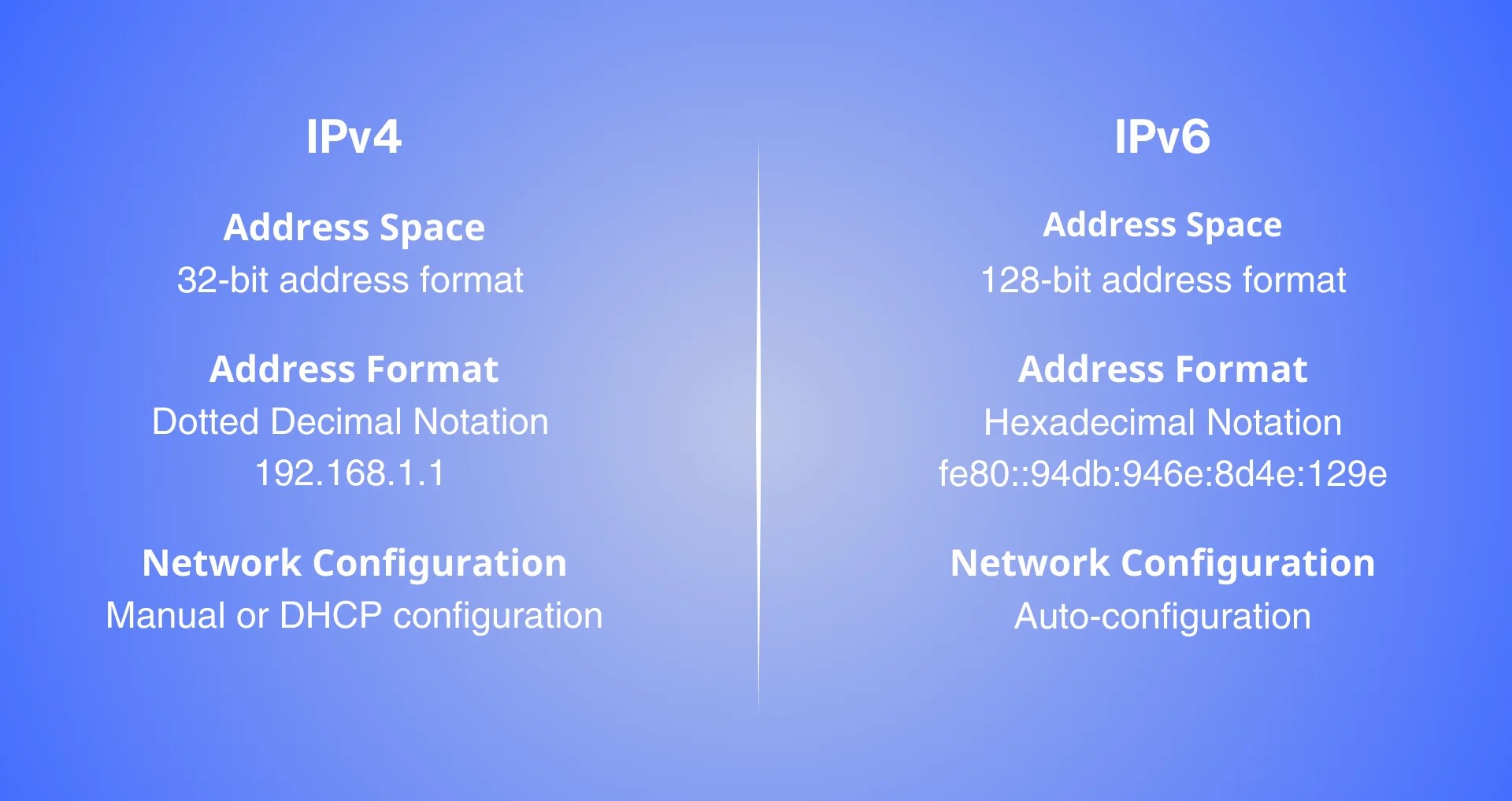
IPv4 or IPv6 Comparison: Key Differences Explained

IPv4 or IPv6 Comparison: Key Differences Explained

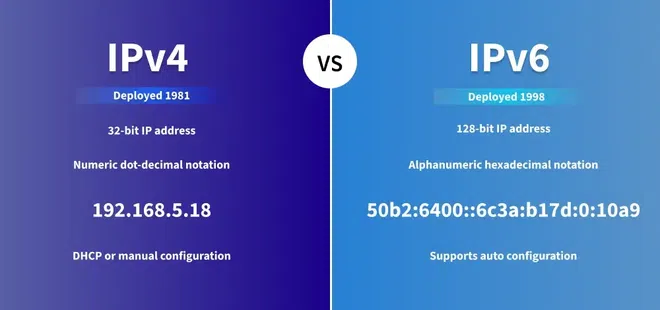
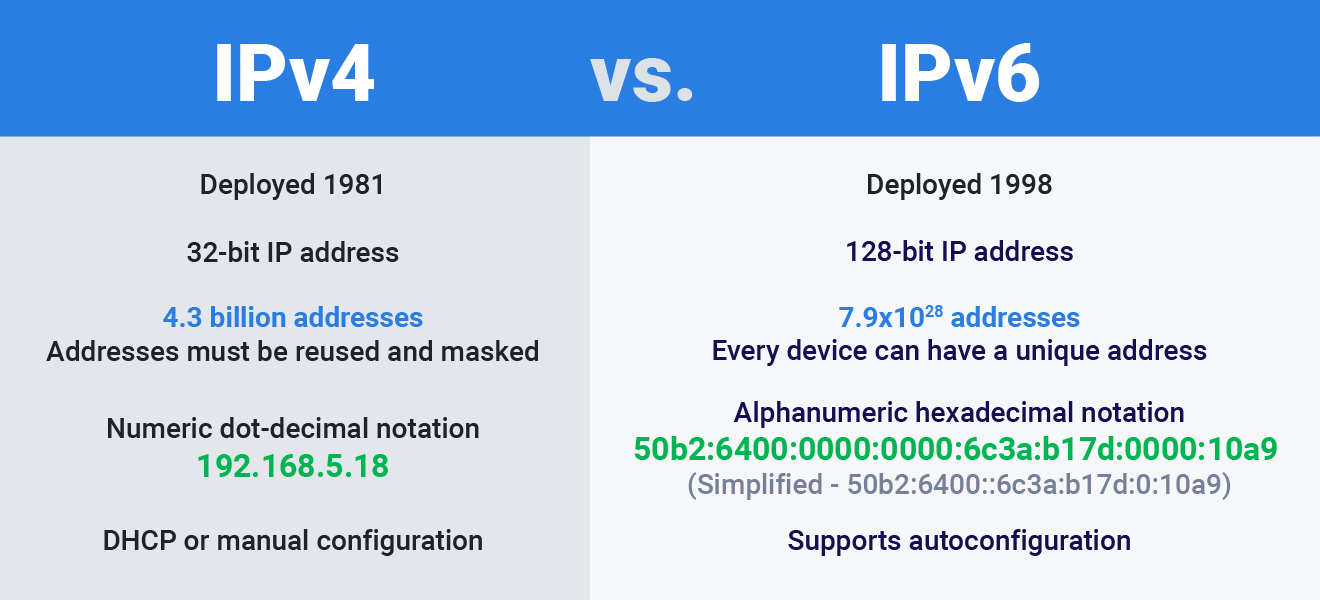
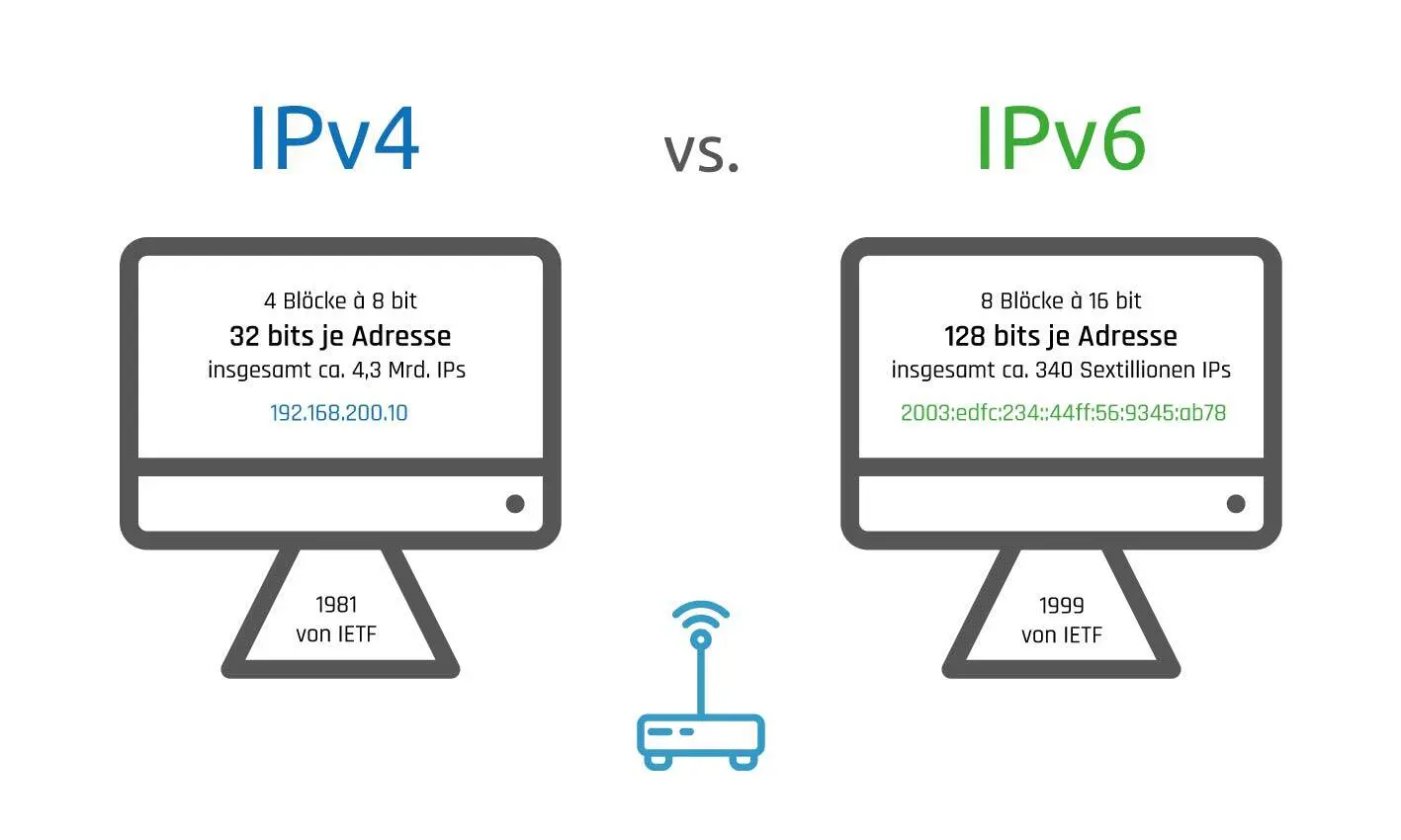
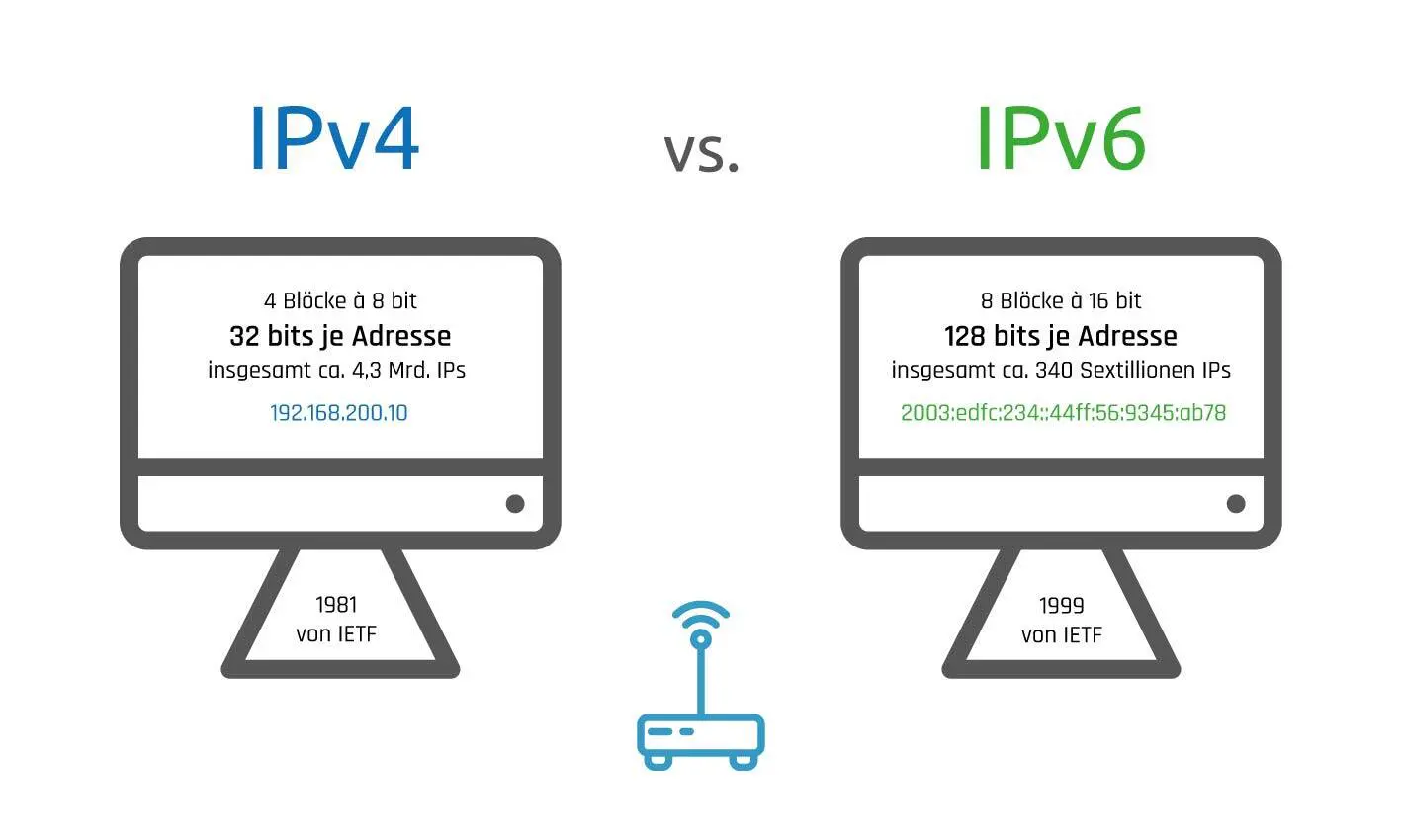
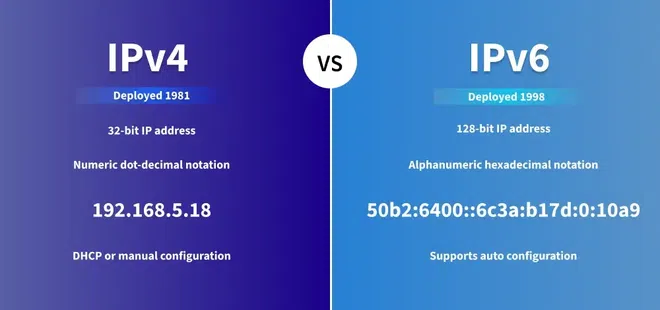
IPv4, the long-standing Internet Protocol, uses 32-bit addresses, supporting about 4.3 billion unique devices. In contrast, IPv6 uses 128-bit addresses, offering virtually unlimited connectivity to meet today’s digital expansion. Beyond address capacity, IPv6 enhances security, simplifies network configuration, and improves data routing efficiency. For businesses and IT professionals, transitioning to IPv6 ensures scalability, future-proofing, and … Read more

Differentiate IPv4 and IPv6 Address

Differentiate IPv4 and IPv6 Address

The internet operates under IP (Internet Protocol) addresses, which allow the device to smoothly communicate. There are two major versions of IP addresses, namely IPv4 and IPv6. Although the internet has been supported by IPv4 for decades, IPv6 is quickly becoming popular as the internet is experiencing a high demand for IP addresses. Business, IT … Read more

What Is IPv6 Address? Format, Types, and Addressing Rules

what-is-IPv6-address

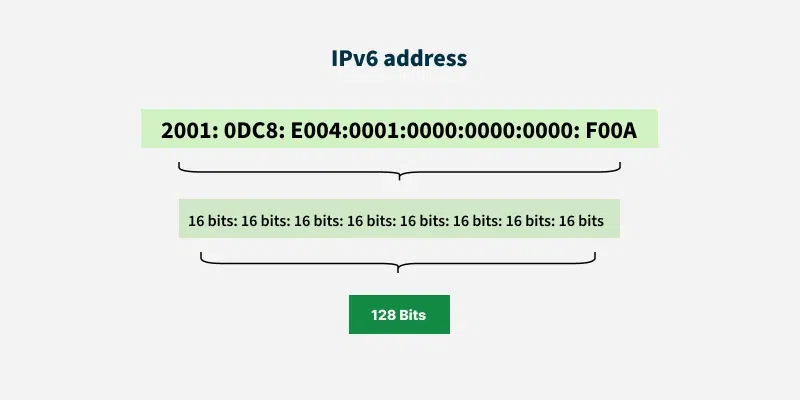
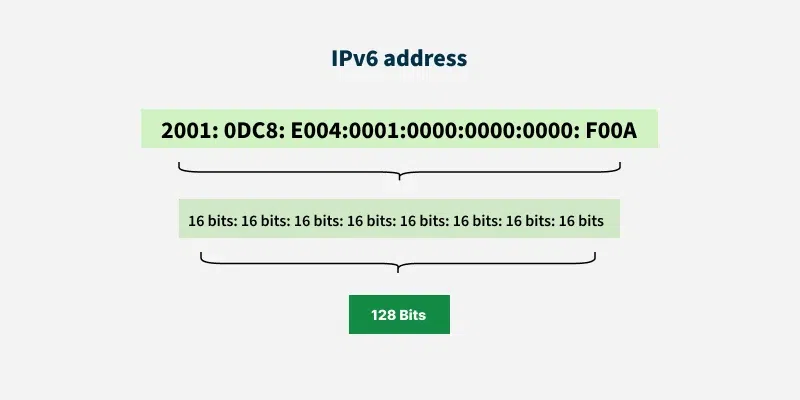
The fast growth of devices connected to the internet has brought an urgent necessity to have a more scalable system of Internet Protocol addresses. The limitations of IPv4 have raised the major need to introduce IPv6 (Internet Protocol version 6). An IPv6 address is a 128-bit alphanumeric number. It has an allocation with various devices … Read more

IPv4 vs IPv6 Which Is Best? Complete Comparison Guide

IPv4-vs-IPv6-which-is-best

The internet uses IP addresses to locate and establish links between devices in networks. As the world goes digital, the change from IPv4 to IPv6 is gaining momentum. IPv4 is still common because it is simple and compatible, whereas IPv6 has a much larger address space and is much more efficient. The decision between IPv4 … Read more

Differentiate IPv4 and IPv6 Address: Pros and Cons Compared

Differentiate IPv4 and IPv6 Address

IP addresses are the basis of the internet, and they consist of unique number identifiers of assigned devices. The two major versions, IPv4 and IPv6, are very important in networking. Although IPv4 has had control over the internet over the decades, IPv6 was formed to address the constraints of IPv4, including address exhaustion. It is … Read more

Convert IPv6 to IPv4: Step-by-Step Networking Guide

Convert IPv6 to IPv4

IPv6 and IPv4 are fundamental Internet protocols with different addresses. With the advancement of networks, the idea to convert IPv6 to IPv4 is necessary to ensure compatibility, legacy and seamless communication in dual-stack networks. The issue of interoperability between the two protocols is one of the problems among many organizations. Using this guide will provide … Read more

IPv4 or IPv6 Comparison: Which Is Better for Businesses

IPv4-or-IPv6-comparison

Digital networking is all about IP addresses, which identify the device in a unique way and make communication between them a smooth process. The selection of the appropriate IP version is important to companies that want to have reliable, scalable, and future operations. Although IPv4 has long been the standard, its small address space is … Read more

IPv4 vs IPv6 Which Is Best for Internet Performance?

ipv4-vs-ipv6

The internet generally runs through Internet Protocol (IP) addresses, which enable devices to communicate over the networks. Internet Protocol version 4 (IPv4) has been in use for decades as a foundation of internet connectivity. But as the internet grew quickly and billions of devices got connected, IPv6 (Internet Protocol Version 6) gave support to address … Read more

What Is IPv6 Address: Structure, Format and Features Explained

What Is IPv6 Address

The newest form of the Internet Protocol is IPv6. It’s main purpose was to resolve the increasing limitations of IPv4, which has a lack of available IP addresses. IPv6 provides seamless connectivity to the current networks due to the large address space, improved security aspects, and routing efficiency. This platform is suitable for businesses, ISPs … Read more