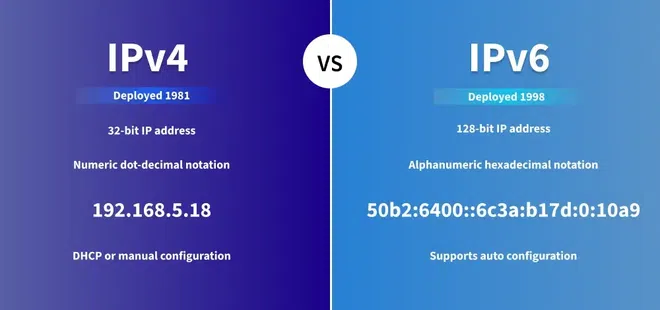
IPv4 and IPv6 are the two main Internet Protocol versions that connect devices and manage network communication. As businesses adopt more cloud services, connected devices, and IoT technologies, IPv4 address shortages have become a growing challenge. IPv6 is popular to offer a larger address space, better network efficiency, and future-ready connectivity. Choosing between is IPv6 better than IPv4 depends on security, scalability, compatibility, and long-term business objectives.
Is IPv6 Better Than IPv4?
There are many reasons why IPv6 has become more popular than IPv4. One of the most significant reasons is that it provides a vastly more addressable space for internet-connected devices. It also enhances the performance of a network, enables the use of modern technologies, and decreases the need to share addresses via NAT. You should buy IPv4 address as it is still popular because of its dependency on numerous networks and devices.
IPv6 is favourable for the future growth and more long-term scalability of the internet. Both protocols are common in parallel in the transition period. Compared to IPv4, today IPv6 offers more flexibility, more connectivity, and more support for cloud services, mobile devices, and applications for the Internet of Things for most businesses.
IPv6 vs IPv4: Key Differences Businesses Should Know
Address Space – Larger
IPv4 has a limited supply of unique addresses, and IPv6 has a near limitless supply of addresses. This way, businesses can easily link more devices without running the risk of running out of addresses. Adoption of IPv6 and future growth of the Internet of Things networks, cloud services, and growing companies all greatly benefit from IPv6.
Improved Network Performance
IPv6 aims to enhance the routing efficiency and streamline packet processing in today’s modern network. How well IPv6 performs depends on network configuration, but in a certain network environment. Companies with modern infrastructure can enjoy more seamless device, application-to-device, application-to-cloud, and user-to-device communication every day.
Excellent Security Features
IPv6 has been available with excellent support for the latest security technologies, such as IPsec. While ensuring secure communication is still possible by proper configuration, IPv6 makes it easier to implement secure communication. Hence, sensitive data can be secured better, and encrypted data transfers can be supported throughout the network and via internet connections.
Easier Network Management
IPv6 provides automatic configuration of addresses, whereby devices can get network configuration with little or no manual input. This helps to save administration time and ease deployment in big business settings. An IT team can run larger networks more effectively and reduce future mistakes, as well as maintenance issues.
Use of Advanced Technologies
IPv6 is comprising important elements in which cloud computing, smart devices, remote working, and Internet of Things applications are all prominent. Modern technologies offer a greater level of scalability and compatibility over the long term to businesses. This enables digital transformation and supports networks’ future growth and rising connectivity needs effectively.
Process of Migration
No need for businesses to phase out IPv4 anytime soon, as the two protocols can coexist with some form of transition, such as Dual Stack. This can enable organizations to migrate to IPv6 gradually without impacting services. In preparation for future internet needs and growth, and to ensure stable connectivity, careful planning is being undertaken.
Is IPv6 Better Than IPv4 for Businesses?
IPv6 is the best fit for the future for many businesses given that it will support future growth and increased digital operations. The increased address space and flexibility in scaling provide benefits to companies leveraging cloud services, remote workers, smart devices, and Internet of Things technologies. You should lease IPv4 addresses as it is still relevant as there are many systems out there that still use it.
In businesses planning or networking, it’s important to prepare for the advent of IPv6 and keep compatibility with IPv4 in the implementation. Using both protocols help ensure uninterrupted operations. By investing in IPv6 now, companies can create more robust, flexible, and future-proof networks to meet evolving technology requirements and growth demands for their businesses.
Should Businesses Switch from IPv4 to IPv6?
Yes, businesses should plan to migrate to IPv6 as it will benefit them in the long term and will be essential for future network growth. You can run both IPv4 and IPv6 side by side while you make the migration. Before making changes, companies should validate hardware compatibility, software support, and readiness of the Internet service provider. A gradual transition minimizes risks and minimizes the disruption of services.
Early preparation can help businesses be more scalable, accommodate more connected devices, and remain adaptable with current technologies. A well-planned, well-tested migration with proper professional implementation helps to ensure that the migration process goes smoothly and that the business is not affected by the process.
IPv6 vs IPv4: Which One Is Better for the Future?
IPv6 would be the superior option in the future, since it was designed to accommodate the increasing number of devices connected to the internet all over the world. It has the advantage of a larger address space, better scalability, and is compatible with modern technologies, making it ideal for long-term business and personal use. The idea of IPv4 selling is expected to remain in use for a long time due to the reliance of existing systems on it.
With the ever-increasing demand for the internet, more and more networks will be based on IPv6. An organization that plans ahead for IPv6 will not have to be limited later and will stay competitive. By adopting IPv6, businesses can ensure that they have the flexibility, capacity, and connectivity they need to continue to grow and innovate in the digital world.
Secure Your Business Network with Reliable IPv4 Solutions
Running a growing business requires dependable IP resources that support seamless connectivity and network performance. IPV4 TradeHub helps organizations access reliable IPv4 solutions designed for modern networking needs. Whether you need IPv4 addresses for expansion, infrastructure management, or long-term planning, our trusted services provide flexibility and stability.