
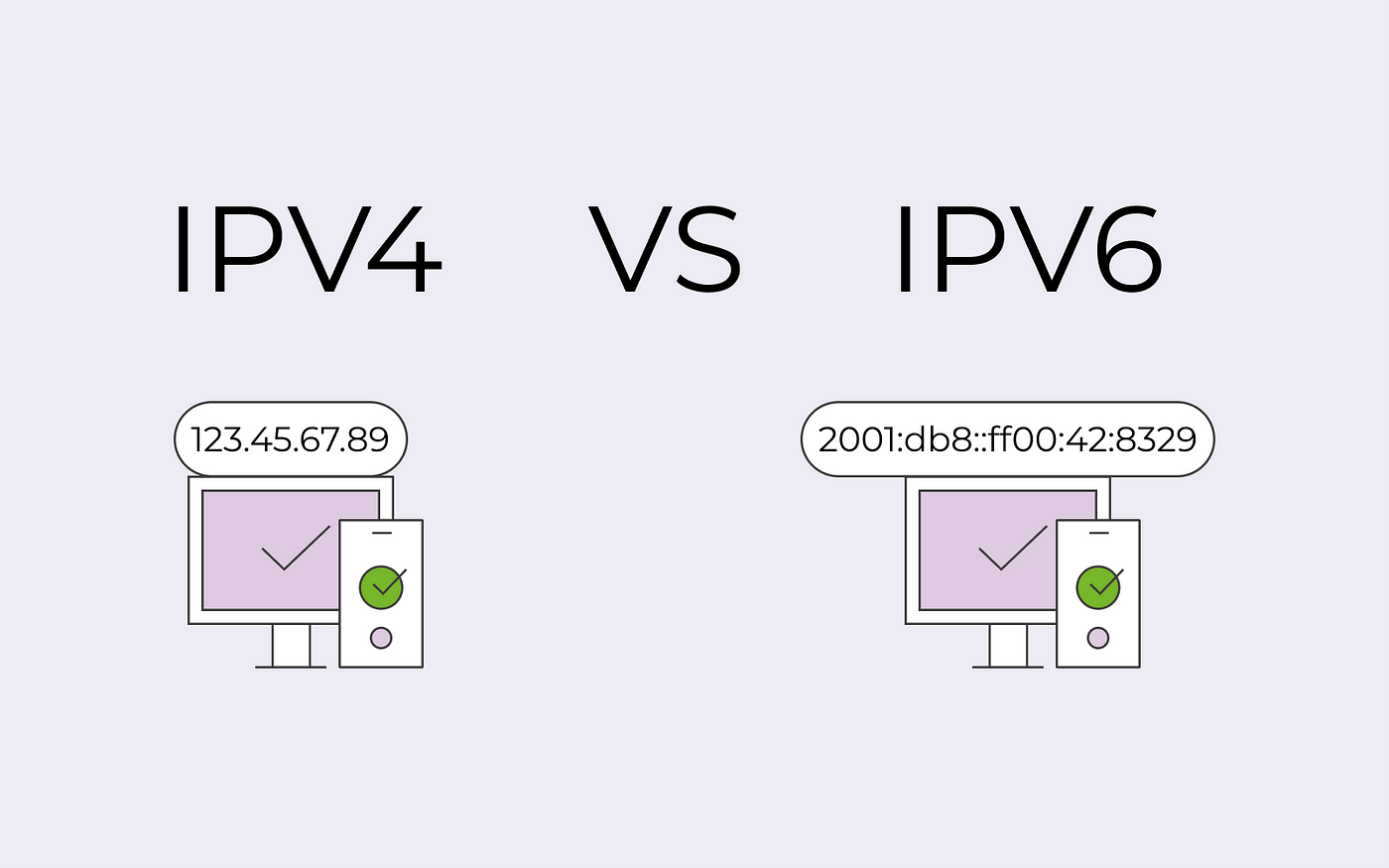
The modern Wide Area Networks (WANs) support more complex traffic, cloud migrations, the growth of remote work and security threats. IPv4 dominated WAN applications. But the depletion of the remaining IPv4 addresses and the rapid acceptance of cloud platforms have raised the popularity of IPv6 among organizations. Nevertheless, the process of IPv6 migration changes the routing, security, QoS, and automation policies on the WAN scale significantly. The blog discusses the significant policy differences between IPv4 and IPv6 over an IT team, and the effects of hybrid IPv4/IPv6 on the management of policy and WAN architecture.
Understanding Major Policy Differences Between IPv4 and IPv6
Addressing and Allocation Policies
The shortage of best IPv4 broker leads organisations to use methods like Network Address Translation (NAT) as well as Classless Inter-Domain Routing (CIDR), as well as individual addressing models. There was a need to address conflicts and routing complexities within manageable levels. Thus, WAN administrators focus on using hierarchical subnetting, IP pool planning and strict policies of allocation. The allocation strategies are even more complex in dual-stack environments.
IPv6 finds it essential to focus on new addressing models. Having huge availability, IPv6 promotes structured address planning with respect to the geographical regions, the functioning roles, or the types of services. Stateless Address Autoconfiguration (SLAAC) and DHCPv6 add features of automatic allocation, which reduces administrative load. Hence, there has to be policy structures that combine prefix delegation, extensions, address lifetimes and transition of addresses. This helps to maintain some consistency between the WAN sites.
Security Policy Differences
When you buy IPv4 address, know that its security policies are all about NAT-based protection, ACLs, and IPSec as an optional feature. NAT acts as the security layer making it difficult to end-to-end encrypt and trace applications. Firewalls and IDS/IPS systems are highly optimized for IPv4, but they need regular updates to address the emerging threats.
IPv6 brings with it obligatory IPSec support as well as extension headers. These are more efficient and local discovery mechanisms. Nevertheless, IPv6 also increases the attack surface because it has more address space, as well as new protocols, such as ICMPv6, ND, and DHCPv6. Security policy should comprise the extension header filtering, RA Guard, DHCPv6 Guard, and Secure Neighbor Discovery (SEND).
Routing Policy Considerations
Well-known protocols that are part of IPv4 routing policy include OSPFv2, BGP4 as well as EIGRP. In many enterprise networks, especially those that lease IPv4 addresses due to scarcity, filtering, route summarization, and redistribution are essential in ensuring the stability of the WAN in large businesses. There is an implementation of path control in policies through weighted metrics, prefix-lists and route-maps.
IPv6 comes with new protocols like OSPFv3 as well as BGP4+. The IPv6 routing does not have the complexity of NAT, but it comes with hierarchical addressing in the selection of the path. The policy variations revolve around the link-local addresses, use of larger prefixes, and the use of neighbor discovery, rather than the address resolution protocol.
QoS and Traffic Management Policies
IPv4 QoS policies have Differentiated Services (DiffServ), the Type of Service field and application-specific traffic shaping. There is always a need for granular control by router-based deep packet inspection. This adds processing load to WAN devices.
IPv6 has better traffic management through the Flow Label field. It allows identification and prioritization of traffic streams more efficiently. This facilitates the adaptive routing and real-time optimization of the WAN architectures, particularly in SD-WAN and hybrid cloud environments. The QoS strategies should be revisited to use IPv6-enabled traffic classification and current telemetry in WAN teams.
Automation, Monitoring, and Policy Enforcement
IPv4 networks are typically based on old management tools, manual ACL generation and device-specific settings. Automation is usually limited due to a lack of consistency in addressing and due to NAT complexities. IPv6 makes automation easier and provides predictable addressing, hierarchy and multicast capabilities.
The SD-WAN controller can impose centralized policies of IPv6 across locations more easily. This allows dynamic path adjustment, coordination of security policies, and monitoring of services. More recent WAN telemetry tools use the IPv6 flow labels for improved analytics. But the hybrid IPv4/IPv6 setups demand two management policies. This makes the transition planning critical in ensuring operational performance.
Policy Challenges in Dual-Stack WAN Deployments
The simultaneous operation between IPv4 and IPv6 places an operation overhead on WAN teams. There should be policies on two addressing schemes and two routing stacks, as well as duplicate firewall regulations and augmented attack surfaces. The use of multi-clouds also complicates the situation since the providers might offer IPv6 in different ways.
Thorough documentation, support of automated routing, and testing frameworks are necessary. This helps to ensure that there is consistency in the security policy, routing policy, and the QoS policy of both protocols. Nevertheless, the dual stack would be the most convenient transition scheme for organizations to switch to the complete IPv6 implementation.
FAQs: Common Questions People Often Ask
1. Why do IPv4 and IPv6 require different WAN policy structures?
IPv4 is based on NAT, limited addressing, and outdated routing models. IPv6 introduces huge addressing, novel protocols, and better security – policies must be redesigned.
2. Does IPv6 offer greater security to the current WANs?
IPv6 has optional IPSec and enhanced neighbour discovery, yet it also has new vulnerabilities. The security is adequate with the updated firewall rules, RA guard and the appropriate policy enforcement.
3. What is the performance of IPv6 in the WAN?
The simplified headers, flow label, and multicast features of IPv6 contribute to quicker routing, efficient traffic, and improvement in performance.
4. Can organizations operate IPv4 and IPv6 on a common WAN?
Yes, dual-stack deployments indeed permit both protocols to coexist. It includes the cost of replicated policies, increased management complexity and thoughtful security.
Get Secure, Reliable IPv4 Resources with IPV4 TradeHub
Ensure your WAN infrastructure remains stable during IPv6 transitions. At IPV4 TradeHub, we provide verified IPv4 blocks, leasing options, and end-to-end transfer support, helping you maintain operational continuity while future-proofing your network. Access premium IPv4 resources today and strengthen your WAN strategy.